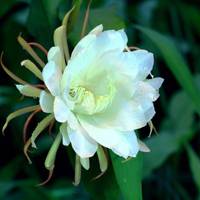
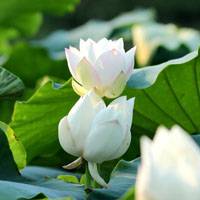
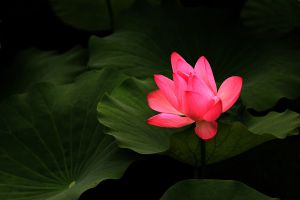
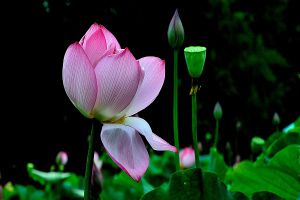
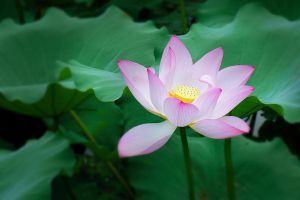
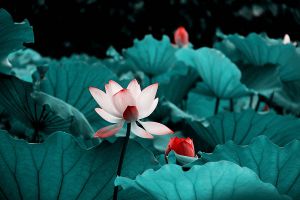
The lotus has rich symbolic meaning, representing purity, elegance and good fortune
Since ancient times, the lotus has been praised as the gentleman among flowers, and its most widely known symbolic meaning is purity and elegance. It takes root in mud yet is able to produce clean blossoms, so it is often used as a metaphor for people of noble character who do not drift with the tide. The praise lavished on the lotus by writers through the ages has also planted this meaning deep in people's hearts.
In religious culture, the lotus holds a special place. Buddhism regards the lotus as a symbol of holiness and purity; lotus thrones and lotus patterns are commonly seen in Buddha statues and murals, used to express a state of transcendence beyond the mundane world and a pure mind. This kind of imagery also gives the lotus an added quality of solemnity and serenity.
In folk tradition, the lotus also carries an auspicious meaning. He (lotus) is homophonous with he (harmony), symbolizing harmony and happiness; lian (lotus) is homophonous with lian (union), and the twin lotus flower is often seen as a symbol of conjugal love and harmony, while the many seeds in the lotus seed pod imply many children and abundant blessings. Lotus patterns are very common on occasions such as weddings and in New Year pictures, carrying people's hopes for a good life.
Today, the symbolic meaning of the lotus has also become part of daily life. Growing lotus in courtyard ponds or as a home potted plant not only provides beauty to admire but also creates a quiet and elegant atmosphere; the lotus also often appears in poetry, painting and garden design, conveying the spiritual pursuit of integrity, honesty and tranquil detachment. Understanding these meanings allows people to appreciate more cultural interest when admiring and growing lotus.
Related Reading