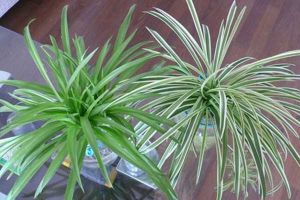
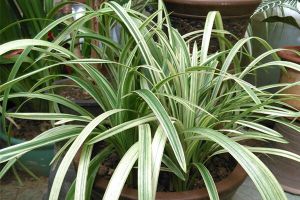
There are many types of spider plants, and the common varieties each have their own characteristics.
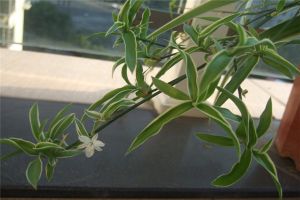
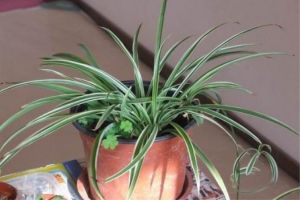
Spider plant (Chlorophytum comosum) is a perennial evergreen herbaceous plant with slender leaves growing in clumps. Its trailing stolons bear small plantlets, resembling a crane with spread wings, which is why it is also called the stork plant. It is highly adaptable and easy to care for, making it a common foliage plant in homes and offices. Spider plant types are mainly classified by leaf variegation and form, and each has its own ornamental characteristics.
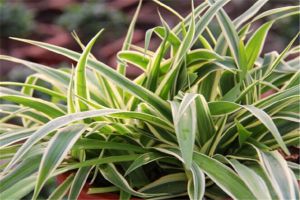
In terms of variegation, the common ones include the golden-edged spider plant, silver-edged spider plant, golden-hearted spider plant, and silver-hearted spider plant. The golden-edged spider plant has golden-yellow leaf margins, while the silver-edged spider plant has white or creamy-white leaf edges; the centers of both leaves are still mainly green. The golden-hearted spider plant and silver-hearted spider plant are just the opposite, with yellow or white longitudinal stripes in the center of the leaves and green edges. These bright markings make the plants look fresher and more elegant.
In terms of leaf shape, there are also broad-leaf and narrow-leaf spider plants. The broad-leaf spider plant has wide, thick leaves and a spreading, imposing plant shape; the narrow-leaf spider plant has slender leaves, giving a soft and natural cascading effect. In addition, there are also plants on the market called lipstick spider plant, peony spider plant, and pearl spider plant; these actually belong to different families and genera, and are named this way only because their branches trail downward and their care is similar to that of spider plants.
Regardless of the variety, spider plants like a warm, humid environment with bright, indirect light, and dislike intense sun exposure and waterlogging in the pot. If problems such as yellowing leaf tips or root rot occur during care, they are mostly related to overwatering, improper lighting, or overly concentrated fertilizer, and the plant can recover once adjustments are made in time. Variegated varieties can also be grown hydroponically; placed by a bright window with regular water changes, they can also grow well.
Related Reading