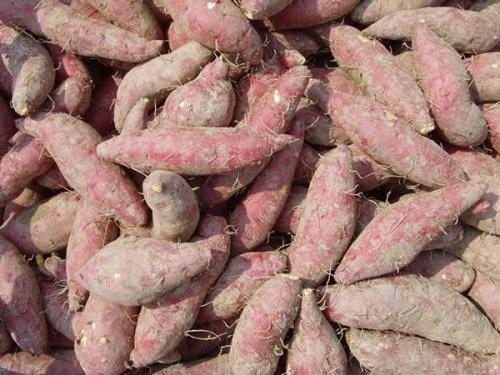
Introduction to the Nutritional Benefits of Taiwan Golden Sweet Potato, Tainong No. 57 Sweet Potato
Since Yan Siqi came to Taiwan in the first year of the Tianqi era of the Ming Dynasty (1621) to develop the area, Shuilin has a history of four hundred years, with an agricultural area of up to 5,800 hectares, ranking among the top in the nation and Yunlin County in agricultural output value. Its main agricultural products include rice, sweet potato, peanuts, corn, garlic, squash, sugarcane, mulberries and medicinal herbs. It is no exaggeration to call Shuilin Township the homeland of history, culture and agriculture.
Most residents of Shuilin Township make a living from farming, and its golden sweet potato (Tainong No. 57) is especially famous and delicious. The sweet potato is a Convolvulaceae crop, and most varieties are edible sweet potatoes. It is a spring and autumn crop with strong regenerative capacity and high yield, making it one of the important crops of the province. It is not only inexpensive and excellent in quality, with a very good flavor and great versatility, but has also been praised by domestic nutrition experts as a natural health food, earning the name "Oriental fries."
Sweet potatoes in Shuilin are generally planted with varieties such as "Tainong 57," "taro sweet potato" and "Tainong 66." Grown in combination with the local soil and climate, the sweet potatoes have a particularly delicious texture. Therefore, when the health and wellness trend rose in the country, the sweet potatoes produced in Shuilin once drove the local farmers' economic development. The annual planting area of edible sweet potatoes is about 1,000-1,200 hectares, accounting for about 10% of the province's planting area, with total output accounting for about 50% of the province's supply and total output value of about 600 million yuan. The characteristics of sweet potatoes in this township: excellent color and shape, sweet and fragrant flesh, good soft and chewy texture, and good palatability. In addition to being eaten fresh, boiled, roasted, or used as pastry ingredients, etc., they can also be processed into high-fiber health foods.
Health information:
Sweet potato is rich in provitamin A, vitamins C and E, beta-carotene, cellulose, potassium and iron, and has the effects of beautifying the skin, boosting qi and promoting longevity. Sweet potato contains large amounts of collagen and mucilage, which can prevent liver and kidney diseases. The fiber in sweet potato can help digestion, reduce constipation, and is beneficial for regulating the stomach and intestines and preventing constipation. Sweet potato contains abundant polysaccharide substances such as mucoprotein as well as phytoestrogen-like components. Therefore, eating it regularly can keep the skin smooth and moisturized, improve body immunity, and help prevent vascular lesions.
Sweet potato contains nutrients such as protein, fat, carbohydrates, crude fiber, calcium, phosphorus, iron and trace elements, and in particular contains carotene, the raw material for making vitamin A, as well as riboflavin, nicotinic acid, thiamine and ascorbic acid. Carotene can treat dim vision and night blindness, nicotinic acid is beneficial for hematopoiesis and can nourish the blood, and ascorbic acid and carotene have antioxidant effects that help prevent vascular lesions. The high fiber content helps with bowel movements and reduces constipation, and may help prevent colon cancer.
Ode to the Sweet Potato
It needs no heavenly favor and does not hope for human effort, yet can endure hardship! It does not compete for rich soil and can yield with humility! It grows without roots yet does not wither for a long time, and can preserve vitality! It complements the five grains and can be benevolent! It can be made into flour, made into wine, used in sacrifices, served to guests, and can assist in rites! Neither stem nor leaf is to be discarded; its value is very light, it easily fills the stomach, and it can encourage frugality! When the elderly eat it, they need not fear choking, and it can support the aged! When children eat it, it stops their crying, and it can show kindness to the young! When travelers and beggars eat it, it can bring equality! Down to chickens and dogs, it can reach all creatures! As for scholars and gentlemen, it can be used to make up for scarcity, thereby strengthening their integrity; it can be widely given, thereby assisting their benevolence; and thus all virtues are complete.