Fipronil Tainted Eggs | Expert Meeting's Three Conclusions | Recalled Eggs Mandated for Composting, Pesticide Flow Tracking, Poultry Farm Disinfection Should Be Supervised
By upstream and downstream reporters Lai Yu-wei and Kong De-lian
In response to the detection of the pesticide fipronil in eggs from three livestock farms in Changhua, the Council of Agriculture held an expert meeting today, inviting relevant scholars for discussion; during the meeting, recommendations were made separately regarding the chickens on the problem farms, the egg products and the poultry farm disinfection plans.
Among these, because fipronil degrades naturally, scholars and agricultural authorities reached a consensus that for the poultry on the problem farms, operators are advised to adopt a "feed reduction" approach to lower egg production, and fipronil must be undetectable before the eggs can be relisted; for the egg products, "composting" is the main method. As for whether future poultry farm disinfection should have regulatory standards established, and how medication should be controlled, the meeting also reached conclusions: in the future, farms must submit a "disinfection plan," and the Bureau of Animal and Plant Health Inspection and Quarantine (BAPHIQ) will be responsible for review and inspection, to reduce the risk of drug misuse.
BAPHIQ: All pesticide sales must be declared; in the future fipronil will be listed as a routine test item for veterinary drugs
After fipronil was detected in egg products, agricultural authorities have imposed movement controls on the problem chicken farms (neither eggs nor chickens may leave the poultry farm), and have carried out inspections of more than 1,600 poultry farms nationwide, with results expected within the next two days.
In response, BAPHIQ Director-General Huang Hui-chang pointed out that this incident was caused by farmers' misuse; however, starting this year, the inbound and outbound flow of pesticides must be declared on time, and the sales process must also issue sales certificates. On this basis, in the future BAPHIQ will consider a complete ban on the 4.95% fipronil suspension concentrate, and will also list this drug as one of the routine test items for veterinary drugs, to prevent problems from arising.
In addition, he also stressed that regarding media reports that eggs from Liancheng Farm tested at 153ppb, and that an adult would exceed the limit by eating one and a half a day, he emphasized, "It is not that eating one will cause a problem right away, but rather that you would have to eat fipronil eggs for many years before there is a problem."



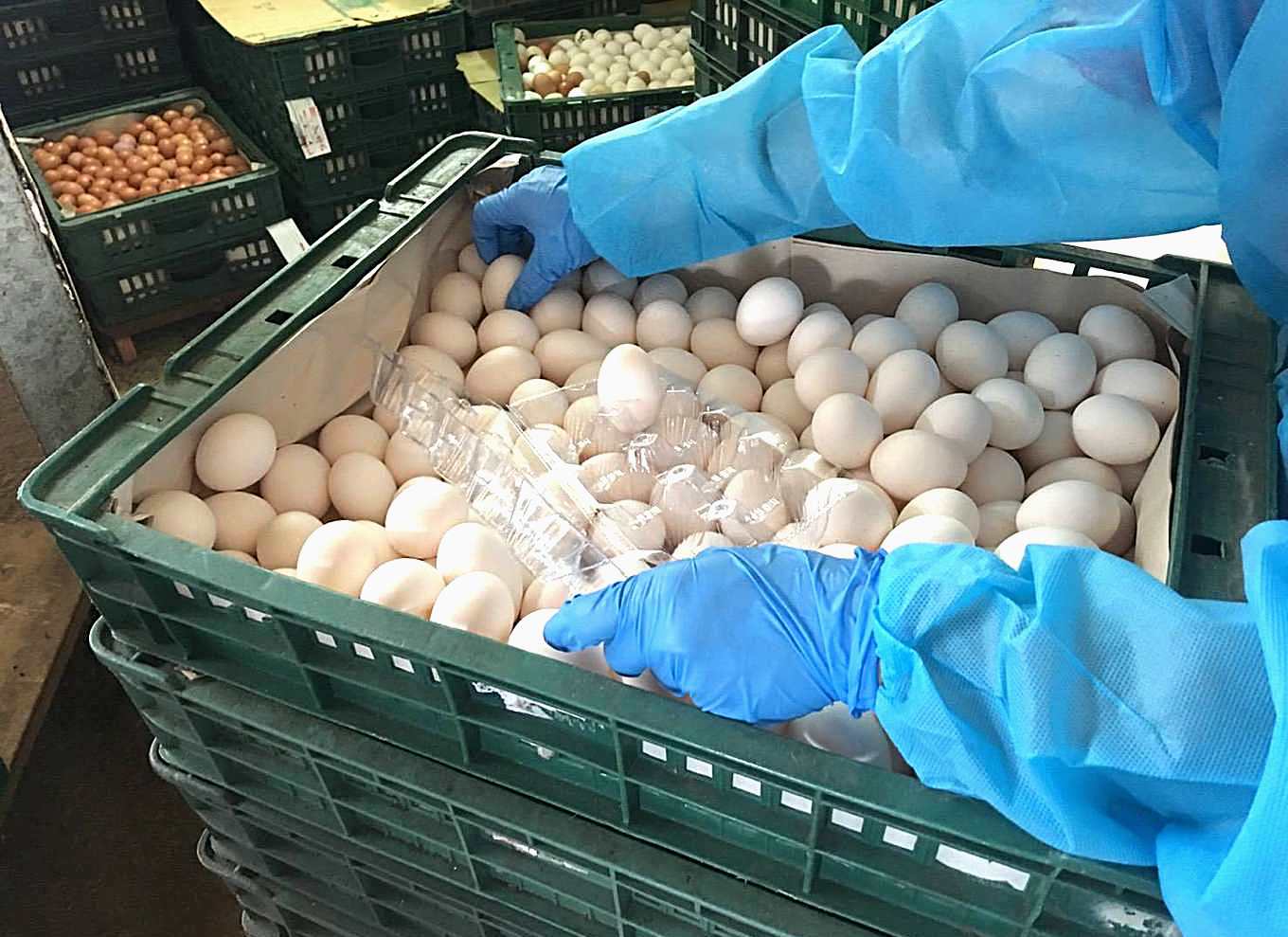
How should the problem eggs be handled? BAPHIQ: Make them into compost
After the problem was discussed, officials and scholars also separately put forward opinions on follow-up measures. As of yesterday, a total of 86,200 eggs had been recalled, and how should these problem eggs be handled? Considering disposal costs and the characteristics of the material, Huang Hui-chang believes that destruction by "composting" is the only feasible method.
BAPHIQ Deputy Director-General Shih Tai-hua further explained that general destruction mostly uses rendering, that is, sending waste into an incinerator to be burned. But when the dioxin egg incident occurred some time ago, BAPHIQ considered that liquid eggs are difficult to incinerate, and additionally worried that after dioxin was burned, the subsequent raw material might still be processed and added to feed, so the toxic eggs were first steamed and solidified, then incinerated and destroyed.
Huang Chin-cheng explained why this time the handling method differs from the previous dioxin egg handling: the decision to make fipronil eggs into "compost" is because dioxin accumulates in the environment, but fipronil gradually degrades, so BAPHIQ recommended to local authorities that the problem eggs be fermented into compost, and before being used for farming they still need to be tested again. At the same time, Shih Tai-hua also pointed out that all problem eggs will be sprayed with dye, to prevent egg products from flowing onto the market.
How to avoid problems in the future? Egg and poultry farms must submit disinfection plans; BAPHIQ will review whether drug use is reasonable
As for the issue of disinfection procedures at egg and poultry farms that scholars care about, Professor Chou Chin-cheng of the Department of Veterinary Medicine at National Taiwan University pointed out that if disinfection at general livestock farms is entrusted to a dedicated unit, then the problem is not great, but the trouble is the part handled by the farms themselves, for which there is no more specific control method.
In response, Huang Chin-cheng also admitted frankly that at the current stage there is still room to strengthen the control of pesticide acquisition and veterinary drug use, so in the future consideration will be given to tasking BAPHIQ as the control authority; poultry farms must submit a disinfection plan when disinfecting, and BAPHIQ will review whether the drugs used are qualified and whether the timing and frequency of use are reasonable, thereby putting an end to the absurd practice of "promotional" drug use.