How to Make Compost? A Gardener Teaches You Step by Step
My interest in making compost came from two things: on one hand, I had to buy and use large amounts of organic fertilizer every year; on the other hand, the kitchen scraps, sawdust, dead branches and fallen leaves from my own home, all of which could be used to make compost, were basically being thrown away and wasted.
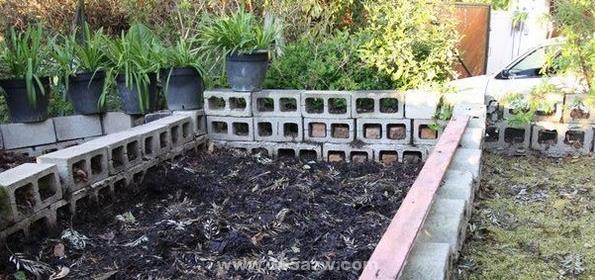
Two years ago, when I learned that I could make compost myself, I built a compost pit in a corner of the vegetable garden, but it did not turn out the way I wanted - the opening at the bottom was too small for a shovel to reach in and turn the material, and it was also very hard to get the finished fertilizer out, so the compost pit I built ended up becoming a garbage pit.
On the subject of composting, he stubbornly believed it was not worth doing at all, while I stubbornly believed that composting was not only necessary but that how to compost was something worth learning. Composting, put broadly, benefits the environment; put narrowly, it benefits oneself - so why not do it?
Without his support or explanation, during this Qingming holiday I resolutely set out to rebuild the compost pit myself. While I was demolishing the pit, a farmer friend who happened to be visiting my home saw me, and he said, "I have a cutting machine at home; tomorrow I will come and cut the bricks for you directly." See that? When you make up your mind to do something, people from all around will come to help you.
There are many methods online for how to compost, but I always like to simplify things, and in fact composting itself really is quite simple - pile together dead branches and fallen leaves, kitchen scraps (excluding meat and other cooked foods) and so on, add a certain amount of water, and ideally cover the top with a plastic sheet to raise the internal temperature and speed up decomposition. Turn it once a month, and it can be made in half a year to a year. Actually, I think turning it or not does not matter much; the purpose of turning is to make compost faster. In the 1970s, rural high-temperature fertilizer piling was all sealed and needed no turning, yet it was still very successful.
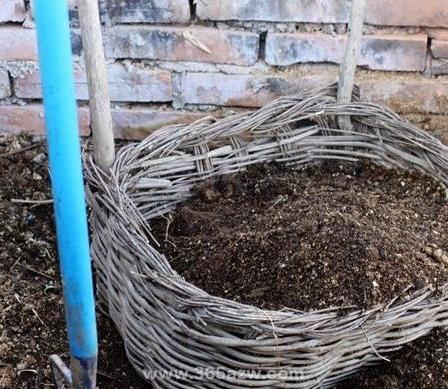
The compost container can be large or small, elaborate or simple. A large one can be a built pit or enclosure, a small one can be a bucket, or you can even bury it deep in the ground on the spot.
For those who grow flowers on balconies and want to make compost, there are dedicated composting books to consult. I have browsed the electronic version of "Home Composting Practical Encyclopedia" by Abu of Taiwan, China, which includes 6 methods specifically for balcony growers on how to compost: open-air kitchen scrap composting suitable for beginners, burlap sack composting that takes up no space, easy-to-assemble ventilated compost bins, wood shaving cat litter composting for cat lovers, the most widely useful worm composting, and small and simple commercially available kitchen scrap buckets, with detailed explanations of each method one by one.
At Liz's garden hotel in South Africa, I saw their compost pit. The finished fertilizer was dark and shiny, and it really looked lovely.
The fertilizer I make myself is much better than commercial potting soil and has no smell at all. But in my earlier inexperienced days, I threw everything into the pit, so when using the finished compost I had to pick out one by one the large pieces of bark, wood chunks, cigarette butts and cigarette packs, peanut shells, thick branches and other non-decomposable items that had been thrown in before.
What is compost?
Compost is a mixture of various organic materials that can be used as fertilizer.
Although what we call organic materials refers to any substance that was once alive, generally speaking, the materials used for composting come from our vegetable garden/garden and kitchen (kitchen scraps).
Compost is produced through the eventual decomposition and rotting of various components. Compost can take anywhere from 2-18 months from making to use. The length of time depends on the method used, the ingredients, the season, and how often the compost is turned.
The Composting Process
The composting process is a process that imitates nature by recycling and reusing organic materials.
Just like baking a cake, composting requires the right combination of ingredients and enough time for each material to be fully "cooked", that is, fully decomposed before the compost is ready. (Note: materials that have not been fully decomposed can harm plant life.)
Along with decomposition, the organic materials change and become what we know as humus. In this process, organic materials are transformed by soil microorganisms, earthworms and insects into a soil-like substance that can be applied in the vegetable garden/garden.
There are many composting methods, and here we will focus only on the three most common and most effective methods - using a compost pile/compost bin, worm composting, and leaf composting.