How to do winter composting? These key points you need to master
Winter temperatures are very low, and many crops grown in winter also need large amounts of fertilizer. Therefore, to speed up the heating and decomposition of fertilizer, composting work must be done well in winter. When composting in winter, there are many things we need to pay close attention to, and we must not operate blindly, so as to ensure the fertilizer decomposes and can be used as quickly as possible. So today I have brought you the key points for winter composting. Let's take a look below!
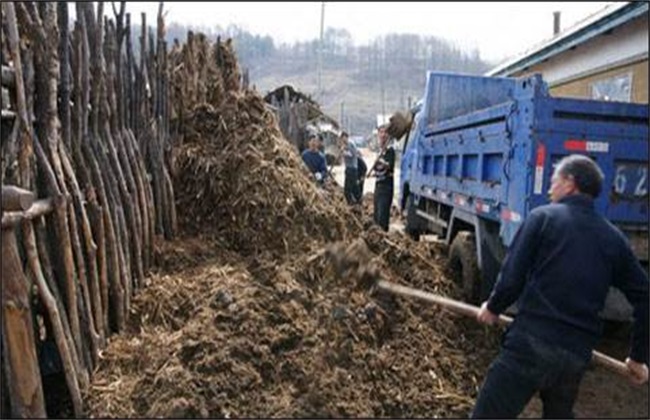
1. Better large than small
In winter, to allow the fertilizer to fully decompose, the fertilizer pile for accumulating and storing fertilizer should follow the principle of being better large than small. Generally, the diameter of the fertilizer pile should be kept at about 4 m, and the height at about 2 m. If the fertilizer pile is too small, it is easily attacked by cold air, causing heat to dissipate quickly and reducing the speed and quality of fertilizer decomposition. Some farmers also place fertilizer in the field in small piles or directly spread it on the ground in winter and spring. This actually causes a large loss of nitrogen, which can reach about 65% in severe cases. Therefore, winter composting should mainly use large sealed piles, and spread it into the field before plowing.
2. Cover with soil and seal with mud
In winter composting, in addition to storing in large piles, the surrounding and top of the fertilizer pile should also be properly covered with soil and sealed with mud. That is, cover it with a layer of soil or grain straw, which can improve insulation performance, prevent the fertilizer and water from being attacked by cold air, and avoid heat dissipating too quickly. Moreover, covering with soil and sealing with mud can also prevent nitrogen from volatilizing too quickly and reduce the loss of nitrogen. Professional data surveys have shown that under the same time conditions, if the fertilizer pile is covered with soil and sealed with mud, the nitrogen loss rate can be kept at about 10%, while if it is not covered with soil and sealed with mud, the loss rate will rise to 30%.
3. Store ash and manure separately
Ash manure is what we often call plant ash, and plant ash is an alkaline fertilizer. When composting, if it is mixed with manure, it will cause a large loss of nitrogen in the manure. According to experiments, if plant ash is used as bedding or spread on manure, then in about three days, the loss of nitrogen can reach 40%. After three months, it will basically all volatilize, while if they are not placed together, the loss rate within three days is only about 5%, and after three months the loss rate does not exceed 50%. Therefore, when composting in winter, ash manure should be stored separately and must not be piled together with manure.
4. Add phosphorus to preserve nitrogen
When composting, an appropriate amount of superphosphate or phosphate rock powder can be added to the fertilizer and mixed into the pile. In this way, its nitrogen-preserving effect is very good. Because winter composting is mainly for nitrogen, and nitrogen loss will have a great impact on the effect of composting. In compost with phosphorus added, the nitrogen loss rate is only 3%, while without it, the loss rate can reach 45%. So when composting in winter, everyone should pay attention to appropriately adding phosphate fertilizer to improve the nitrogen-preserving effect.
The above is a brief introduction to the key points of winter composting. That is all for today's introduction. This article is for reference only, and I hope it can help everyone!