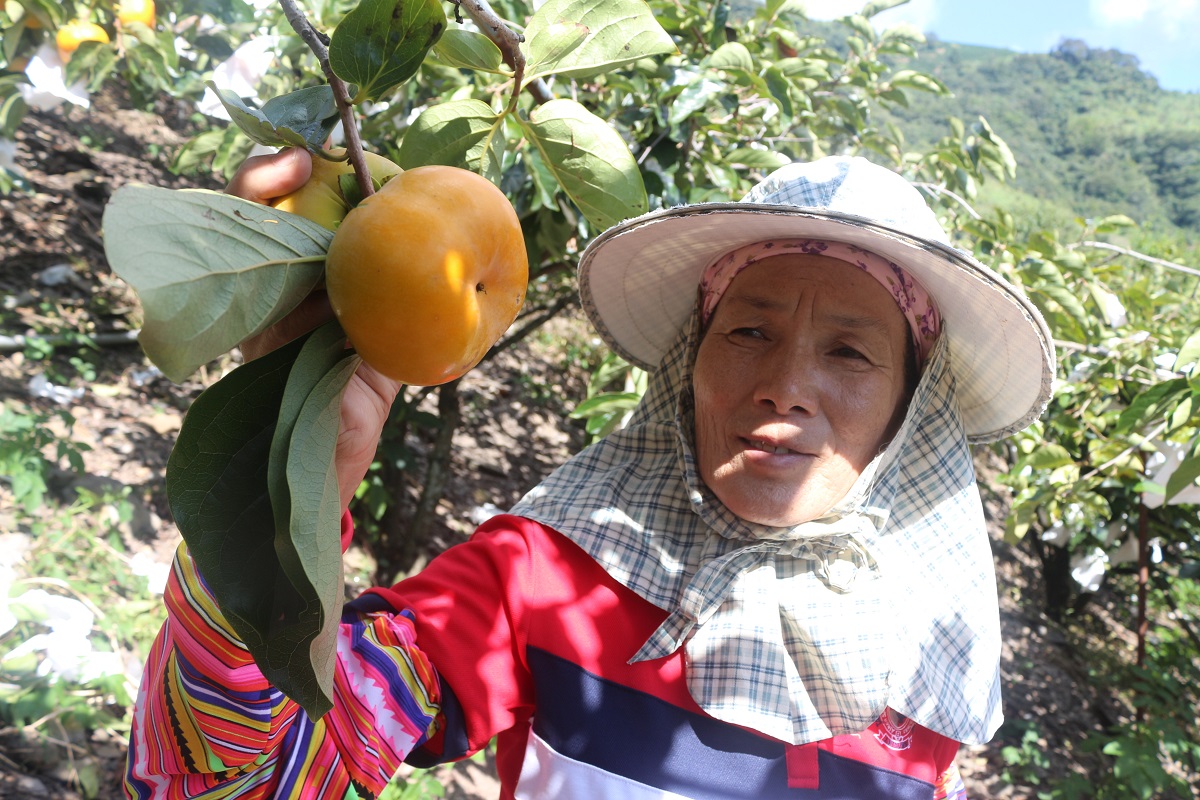
What varieties of sweet persimmon are there and what are the characteristics of astringent persimmon? Are the components and nutritional value of persimmon high?
Basic introduction to persimmon. Persimmon originated in the mainland, and has a history of more than three thousand years so far. In the "Book of Rites", the Nei Ze chapter, persimmon is listed as a precious food, so it can be seen that persimmon has been eaten for a very long time. Persimmon is a tree plant of the family Ebenaceae, and there are quite a lot of persimmon varieties. Persimmon varieties developed around the world have reached more than a thousand kinds. The common types planted in Taiwan, China include several varieties: Jiro persimmon, Fuyu persimmon, Hana Gosho, and Niu Xin persimmon. Among them, Jiro persimmon and Fuyu persimmon belong to the sweet persimmon varieties introduced from Japan in recent years, and persimmons are generally divided into two major categories, astringent persimmon and sweet persimmon, and the classification is based on whether the fruit can naturally lose astringency on the tree
Sweet persimmon
Fuyu: an improved variety introduced from Japan. The fruit is large, the fruit shape is oblate, the fruit top is full and round, the fruit skin is red-yellow, and the flesh is juicy, delicate and sweet. It is currently the variety with the widest cultivation area in Taiwan, China, and it looks the most similar to Hana Gosho, with a later ripening period.
Jiro: an improved variety introduced from Japan. The fruit is large, and compared with other varieties, it is relatively flat, the cross section is square, the fruit top is slightly sunken and has four obvious horizontal grooves, and the flesh is dense and crisp.
Hana Gosho: currently the cultivation area in Taiwan, China is small and the harvest period is relatively short, so the yield is relatively low. Its appearance is similar to Fuyu, only its height is lower than Fuyu, and the fruit top is prone to splitting. In addition, because the loss of astringency is relatively incomplete, compared with the other two varieties it has a slight astringent taste
Astringent persimmon:that is, the fruit still has an astringent taste when harvested, and it needs to be artificially de-astringented to taste good. The most produced variety, Niu Xin persimmon, has orange-yellow fruit skin and is usually de-astringented with limewater. It is mainly used as a raw material for dried persimmon. In Hankton Village, Xinpu Township, it is the center of persimmon processing into dried persimmon across Taiwan, China, with an annual output of as much as 200,000 jin.
Which kind of persimmon do you like to eat?