Passion Fruit Viral Disease: Symptom Identification and Control Measures
Passion fruit is inexpensive and is now very popular with many customers. In the process of growing passion fruit, passion fruit viral disease is a disease that gives many growers a headache. So what are the symptoms of passion fruit viral disease? How should it be managed?
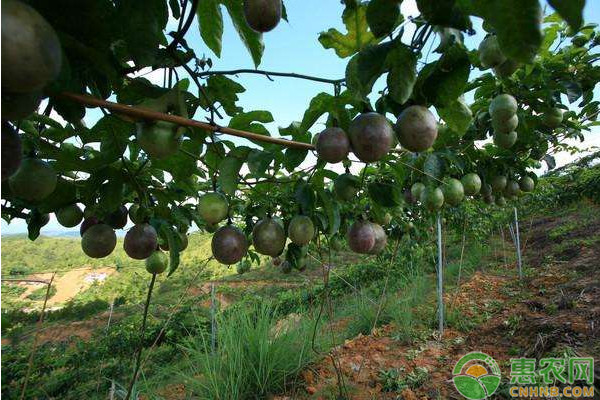
I. Passion Fruit Viral Disease Symptoms
The main characteristics shown on the leaves fall roughly into the following 3 types:
(1) Uneven type. Dark and light yellow patterns appear, the leaves contract into a deformed shape, the leaf shape is distorted, and the surface is uneven;
(2) Thickened type. Dark and light yellow spots appear, the leaves thicken, and the whorled leaves are thick and hard;
(3) Leaf-curl type. Dark and light yellow patterns appear, the leaf edges curl inward with the midrib as the center, and the petioles are attached at an obtuse angle. The fruit mainly shows as small and deformed, hardened, with a thick rind and a shrunken fruit cavity.
II. Passion Fruit Viral Disease Control Measures
1. Choose disease-free seedlings, and disinfect the soil before transplanting. In areas with high viral incidence, planting one crop per year is recommended.
2. Minimize intercropping, and especially do not intercrop with solanaceous or cucurbit vegetables, as this easily triggers viral disease.
3. If viral disease or suspected viral disease is found at the seedling stage, resolutely pull the plants out to prevent greater damage.
4. Fertilize reasonably. Take good care of the roots, promote vigorous plant growth, and improve the tree's resistance. During the fruiting period, improve fertilizer and water management, especially potassium fertilizer and organic fertilizer. At the same time, apply foliar fertilizers containing boron, magnesium, etc. Poor pollination and boron deficiency can also cause deformed fruit.
5. Control virus-transmitting vectors such as aphids, whiteflies and mites. For aphids, beta-cypermethrin thiamethoxam/imidacloprid can be used; for mites, spirodiclofen, etoxazole, clofentezine, cyenopyrafen, etc. can be used.
6. Prune scientifically. Side buds should not be cut with scissors; they should be pinched off by hand when they grow to 3-5 cm. When pruning branches, pay attention to disinfecting the scissors to reduce mutual infection between plants.
7. Foliar spraying. In the early stage of passion fruit viral disease, block pathogen invasion and effectively prevent bacteria, fungi, viruses, etc. Promote well-developed crop roots and stems and vigorous plants.
In summary, the above is all the content related to passion fruit viral disease control, for reference. Passion fruit actually has quite a variety of diseases, so grower friends should raise their awareness of prevention.