Fruit Growing Mini-Class: How Can Apple Orchards Maintain High Yields?
Apple trees belong to the Rosaceae family and are deciduous trees that mainly grow in warm temperate regions. In recent years, apple production in China has continued to rise, but because some growers blindly expanded apple tree planting in pursuit of economic returns and did not pay enough attention to management methods, the quality of fresh apples has been relatively poor, the taste is not good, and yields are low. So how can orchards maintain high yields? Let's take a look together below.
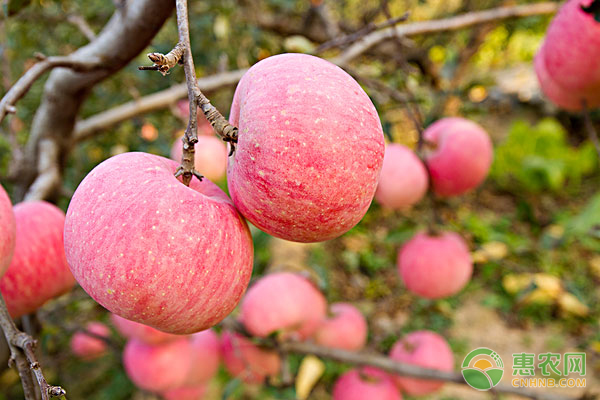
I. Site Selection
According to the local soil, water resources, and climate conditions, it is recommended that when selecting an orchard site, preference be given to flat land or south-facing hillsides with good soil conditions and irrigation capacity. In addition, according to China's green organic fresh fruit product standards, before establishing the orchard, air, farmland irrigation, and soil quality must be tested to ensure that the orchard location and basic conditions meet the standards for green organic fresh fruit production orchards, laying the foundation for future application for environmentally friendly product certification.
II. Soil Improvement
To ensure that Fuji apples have a relatively high planting survival rate, improved seedling vigor, reduced delayed emergence, and maintained early bearing and high yields, in actual production, reasonable soil improvement should be carried out for newly planted orchards in the autumn of the year before spring planting. Before the soil freezes in autumn, planting trenches (holes) should be dug well, with the planting trenches (holes) about 60 cm wide and about 60 cm deep. The bottom layer of the planting trench (hole) should be covered with about 20 cm of corn stalks, the middle and upper layers should be filled with about 20 cm of decomposed organic fertilizer, and the subsoil should be filled in at the top, backfilled immediately, and thoroughly irrigated before freezing.
III. Nursery Stock Cultivation
1. Nursery stock cultivation
It is recommended that introduced nursery stock be cultivated in the orchard nursery, cutting off all branches to strengthen the main trunk so that the nursery stock can adapt to the local climate characteristics as soon as possible. In addition, the uniformity of the cultivated large nursery stock improves, with an average plant height of 1.8 to 2.5 m and a thickness of about 2 cm.
2. Select and arrange pollinator trees
A certain number of pollinator trees need to be planted in the orchard area. High-quality varieties such as Gala and Qinguan can be selected as pollinator varieties. The planting ratio of the main variety Fuji to pollinator varieties is generally controlled at 4:1——3:1.
3. Cultivate large cup seedlings
A certain number of large cup seedlings should be cultivated in the nursery. If dead or missing seedlings are found after planting, the large seedlings in the cups can be planted immediately at any time to maintain same-year orchard establishment.
IV. Planting
1. Preparation before planting
Before the soil freezes in the autumn of the year before planting, planting trenches must be dug well. It is recommended that the width and depth of the planting trenches be 60 to 80 cm, separating the topsoil and subsoil. When backfilling, fill the lowest layer with 10 to 20 cm of topsoil and crushed corn stalk and vine compounds, then fill in mixed topsoil and decomposed organic fertilizer, and mix in microbial fertilizer, with a thickness of 30 to 40 cm.
2. Planting time
Orchard areas generally use spring planting, planting before the buds sprout. According to the temperature and soil temperature conditions at the time, this is generally carried out in mid-to-late April.
3. Planting density
To improve the level of specialization in the project area and increase efficiency and economic returns, the wide-row and sparse-planting method is adopted. For early bearing, a spacing of 4*5 can be planted as 2*5, keeping 110 seedlings/664 sq m.
4. Watering, staking, film mulching, trunk heading
Irrigate thoroughly immediately after planting. Irrigation or small pipe outflow irrigation technology can be used, and irrigate thoroughly again after 7 d. After watering, immediately cover with black agricultural film and cover and compact the surrounding area tightly with soil. Because three-year-old large seedlings are planted, the trunk heading height is 1.0 to 1.5 m. Because the spring wind in the project area is very strong, bamboo poles should be set up and tied beside each apple seedling, providing good fixation and an effect of enhancing the central leader.
V. Fertilization
1. Set up composting pits
Composting pits should be set up in the orchard. At least 2 layers of plastic rainproof cloth should be laid at the bottom and around the fertilizer pit to prevent unfermented poultry and livestock manure from polluting surface water sources. Put pig, sheep, and poultry manure, as well as corn stalks, crushed pruned branches from the orchard, and crushed mowed weeds, into the composting pit, and use them together with fermentation microbial agents, finally sealing the plastic rainproof cloth tightly and covering it tightly with soil.
2. Preparation of “organic fertilizer”
The “organic fertilizer” used in this technology, in addition to organic fertilizer fully composted in the composting pit for one year, also needs to incorporate 1/3 sheep manure and crushed corn stalks and weeds, and be applied together with a small amount of compound fertilizer.
3. Application time and application amount
Application time: The apple early promotion, high efficiency, and ecological cycle project is mainly based on application after autumn fruit harvest, supplemented in the spring of the following year.
Application amount: The amount of fertilizer applied should be determined according to crown diameter and yield. In the project area, during the young apple tree stage, 2000 to 3000 kg/664 sq m of organic fertilizer is applied, and during the full production period, 3000 to 4000 kg/664 sq m of organic fertilizer is applied annually.
4. Fertilization method
After autumn fruit harvest each year, evenly spread the prepared “organic fertilizer” under the tree canopy projection, and combine it with deep loosening throughout the orchard to a depth of 20 to 30 cm, turning the organic fertilizer, weeds, and so on together into the ground, and reasonably damaging the root system to promote new root sprouting and improve the absorption capacity of the trunk. Before bud break in the spring of the following year, apply organic fertilizer in the same way by trench application, and apply it together with quick-acting nitrogen fertilizer and compound fertilizer.
5. Natural grass growing between rows, mulching under the canopy
The project area adopts natural grass growing between rows, which has good effects such as water retention and moisture preservation and reducing the occurrence of diseases and insect pests. Under the canopy, agricultural film or ground fabric is used for mulching to prevent weed growth, maintain water level, reduce water loss, and increase soil temperature to promote safe overwintering of the trunk. Grass growing between rows and canopy mulching can effectively reduce watering frequency by more than 1/3.
VI. Shaping and Pruning
To maintain the technical goals of early bearing and high yield, Gala and Qinguan require more meticulous and strict technical steps in shaping and pruning. Spindle shape or small canopy delayed open center shape can be used for shaping. During the young tree stage of the two varieties, the amount of pruning should be small, pruning lightly and thinning little as much as possible, and leaving more branches. Once peach trees enter the full production period, branch thinning or contraction should be carried out appropriately.
VII. Fruit Bagging
During the young fruit growth period of apples and pears, specially made fruit bags are used to bag the young fruit. On the one hand, fruit bagging treatment can improve fruit quality, making the peel smooth and the color, aroma, and taste good; on the other hand, it can reduce damage to fruit from boring bean pests and diseases. Fruit bagging often uses two-layer paper bags, with the inner layer made of antibacterial paper and the outer layer made of waterproof paper. To make the fruit color well, the fruit bags are generally removed about 30 d before harvest. Removing the paper bags at noon should be avoided. Remove the outer paper bag first, and then remove the inner paper bag after 2 d.
VIII. Disease and Pest Control
Every autumn, promptly remove diseased branches, diseased leaves, and rotten fruit in the orchard. Old bark peeling bark and rotten diseased spots on the trunk should be scraped off promptly and microbial agents applied, and the trunk should be whitewashed before the start of winter. Physical control techniques such as sweet-and-sour trapping liquid, insect-attracting belts, sticky insect boards, and insect-killing lamps can effectively control pests such as leaf rollers and scarab beetles.
The above are the technical key points for orchards to maintain high yields. The market demand for apples is relatively large, so more and more farmers are planting apples. However, when planting apples, farmers must master the above technical key points well to achieve the goal of high yields. It is hoped that the above content can be of some help to apple growers.