Chestnut Spring Pruning Methods and Technical Key Points
Chestnut can be pruned in all four seasons, but the pruning time and key points differ by season. Spring is the season when chestnut buds sprout, and it is also a good time to prune chestnut. So how should chestnut be pruned in spring? When should it be pruned? Let's learn about it together with the editor.
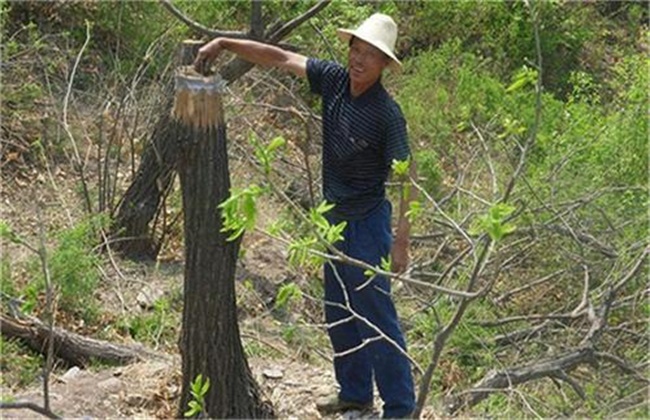
1. The role and timing of chestnut spring pruning
Chestnut spring pruning is generally carried out from one month before budbreak to the bud-swelling stage. This is the best time for pruning. At this time, the sap flow of the chestnut tree begins to intensify, the nutrients stored in the roots begin to hydrolyze and are transported upward, and the flower buds further differentiate. This is a critical period for flower sex differentiation. This is because female flower differentiation occurs during the bud-swelling stage, and morphological differentiation takes place on the outer shoot beyond the bud. Pruning at this time can make nutrients more concentrated, which is beneficial to further flower bud differentiation and increases the number of female flowers.
2. Branch bending method
In spring, when the sap of the chestnut plant is flowing, use rope or wire to pull small-angle scaffold branches to the required angle. Branch bending can also be done in summer. At the same time, in spring, pull strong and vigorous auxiliary nutrient branches flat, and notch multiple buds at the desired branching positions to promote the emergence of robust branches. When winter pruning comes, cut back to the robust branches to form relatively compact fruiting branch groups.
3. Notching method
The notching method refers to making a horizontal cut 0.5 cm above the bud before spring budbreak with a grafting knife, deep enough to reach the xylem, cutting through the cortex. Because the nutrients above are blocked, the downward transport of hormones produced by the terminal bud that inhibit lateral bud sprouting is restricted, which can make young buds sprout into strong branches. The cut made by a grafting knife is not obvious, and missed cuts are very likely to occur, so in production, steel saw blades are often used to make saw wounds.
4. Pinching and bud removal
The pinching method is mainly used during the chestnut growing season to remove the non-lignified tip of new shoots. For young trees, it can precisely control the length of new shoots, promote branching, and bring the tree into shape earlier. Pinching overly long pre-fruiting shoot tips can slow the outward movement of the fruiting position. For some fruiting branches, removing all pre-fruiting shoot tips can branch and move the fruiting position outward. Bud removal is generally done from mixed budbreak to before leaf expansion, removing excess young buds sprouting at renewal sites. This is more effective than pruning branches slightly later on long shoots, and it can also increase the number of female flowers and reduce the abortion rate of mixed inflorescences, making it more suitable for densely planted orchards.
The above is an introduction to chestnut spring pruning methods. We hope it can help you. To learn more related knowledge, please stay tuned to us.