How to fertilize young wampee trees? Key practical fertilization techniques
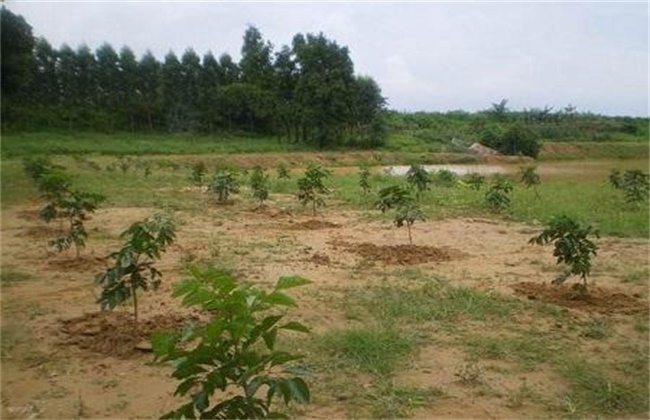
Young wampee trees grow vigorously, and at this stage they need a large supply of nutrients to meet the needs of plant growth. Fertilizing at this time can accelerate their vegetative growth and promote early fruiting and high yields. However, the root system of young trees is not well developed and is shallowly distributed, so fertilization also requires attention to key points. Below, follow the editor to take a look at the fertilization methods for young wampee trees.
1. Fertilization principles
After planting, young wampee trees quickly form a root system and canopy, and can push out 3-4 new flushes each year. Plants that grow more vigorously often begin to bear fruit after only 1-2 years of planting. At this time, fertilization should follow the principle of light fertilizer applied frequently, avoiding concentrated fertilizer that damages the roots, and also preventing excessive vegetative growth of young trees, which is unfavorable for flower bud differentiation and flowering and fruiting. In addition, fertilization should be mainly nitrogen fertilizer, reasonably combined with phosphorus and potassium fertilizers as well as calcium, magnesium and other micro-fertilizers.
2. Fertilization timing
Young wampee trees can begin to be fertilized 1 month after planting and surviving. After that, fertilize each time before new flushes sprout and after new flushes turn green. The first two fertilizations are soil fertilization, and the last one is foliar fertilization. Fertilizing before new flushes sprout can promote new flush elongation and leaf expansion. Fertilizing during the period when new flushes turn green can promote the leaves of new flushes to turn green, effectively improve photosynthetic efficiency, and make the branches thick and strong. Fertilizing after new flushes turn green can accelerate the maturation of new flushes, increase leaf thickness and the accumulation of organic matter, and shorten the flush period. In addition, in winter, organic fertilizer should be deeply applied in combination with expanding the planting hole and improving the soil to strengthen nutrient reserves.
3. Fertilization methods
Most of the absorbing roots of wampee are distributed 40 cm outside the drip line of the canopy, so in order to facilitate the root system and absorbing roots to grow in depth and breadth, fertilization should be carried out near the drip line of the canopy. When fertilizing, quick-acting fertilizers should be applied shallowly, while organic fertilizers are suitable for deep application. They can be applied by methods such as ring-shaped trenches, hole application, radial trench application, strip trench application and broadcasting. Foliar fertilization is also called leaf spraying, which uses a sprayer to spray fertilizer solution onto the leaves. This fertilization method uses less fertilizer, takes effect quickly, and can quickly supplement nutrients for the plant.
4. Fertilization amount
For dry chemical fertilizer application, generally apply 75-100 grams of compound fertilizer per plant each time, or 50-75 grams of urea. For water fertilizer, the application amount also varies depending on the fertilizer. Taking decomposed human manure or decomposed bran fertilizer at a 20-fold dilution as an example, generally apply 5 kg per plant each time, or mix 55 grams of urea and 55 grams of compound fertilizer with 5 liters of water for drenching.
The above is an introduction to fertilization techniques for young wampee trees. We hope it can help you. If you want to learn more related knowledge, please keep following us.