How to manage strawberries after planting so they grow well
Strawberries are generally planted in August-September, but if greenhouse facilities are available, they can also be cultivated in spring, with March-April being the spring strawberry planting period. After planting, strawberries begin to enter the flower bud differentiation stage, and the quality of flower bud differentiation is related to yield and quality. Therefore, post-planting management is extremely important, so how do you manage strawberries well after planting? Let's learn about it together.
1. Watering after planting
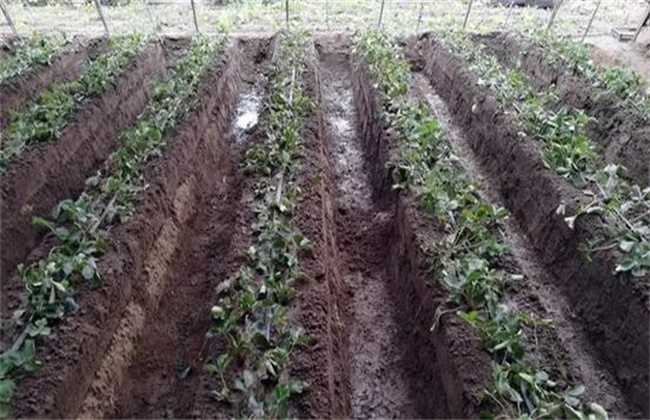
On the day of planting, strawberries should be watered promptly with water to help them recover from transplanting. The first watering is key to seedling survival, because strawberry roots are relatively shallow and not drought-tolerant, so watering must be done early. Also, water heavily, watering along the furrows, soaking through and breaking up the soil clods to promote root growth. Watering should be done in the early morning or evening, avoiding the midday high-temperature period as much as possible, so as not to affect root growth. If floating seedlings appear after watering, they should be straightened promptly. Before the seedlings recover, the soil should be kept moist, watering once every 1-2 days if necessary. After about a week, when the heart leaves begin to grow, it means the seedlings have recovered; at this point stop watering, and only water when the soil is dry, keeping the soil alternating between dry and moist.
2. Loosening soil and weeding
After strawberries recover from transplanting, the soil needs to be loosened promptly. Loosening the soil improves soil aeration and promotes new root sprouting. Because the roots are not yet firmly established after recovering from transplanting, loosening should be shallow, and the soil around the roots should not be loosened, to avoid damaging the roots and plants. After each subsequent watering, when the soil is almost but not completely dry, loosen the soil promptly to prevent rapid water evaporation and soil compaction that blocks air. Because the soil is moist, weeds also grow quickly, so weeding should be done promptly during cultivation.
3. Fertilizing
After strawberries recover from transplanting, fertilizing can be done according to the condition of the seedlings. For example, when strawberry seedlings are weak, urea and rooting powder should be applied promptly to promote seedling rooting and growth. Per mu, it is very easy to apply 7 kg of urea plus rooting powder as a liquid application, but if the strawberry seedlings are growing well, no additional fertilizer is needed, because excess nutrients will cause the plants to delay flower bud differentiation.
4. Removing leaves and buds
As strawberry plants continue to grow, they produce large numbers of old and withered leaves. An increase in old and withered leaves affects the swelling of the stems and also induces disease occurrence, so after the plants recover from transplanting, old and withered leaves as well as newly grown runners should be removed in a timely manner. During the peak growing period, large numbers of axillary buds and runners will grow; to reduce nutrient consumption by the plants, the grown axillary buds and runners should be removed as early as possible. It should be noted that too many leaves should not be removed, as sparse leaves will slow down flowering and fruit enlargement and delay the maturity period.
The above is an introduction to how to manage strawberries after planting. We hope it helps you. If you want to learn more related knowledge, please follow us. 9