How to do mango shoot control well? A detailed guide to practical methods
Before the mango flower bud differentiation, choosing suitable climate conditions for shoot control can allow mango branches and shoots to adjust their growth in time or delay growth, prompting the plant to accumulate more nutrients, promoting plump flower buds, and benefiting flower bud differentiation and fruit development. So how should mango shoot control be carried out? Follow the editor and take a look.
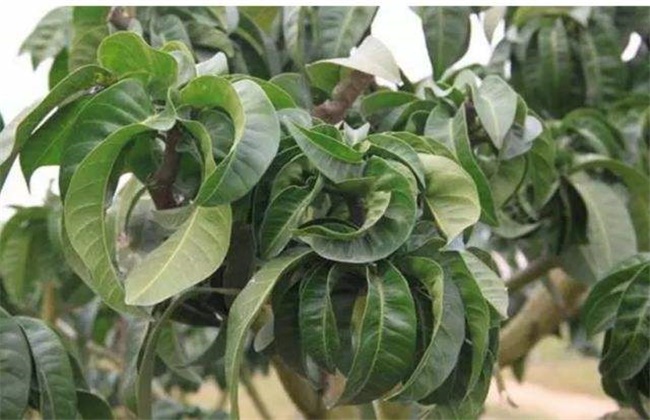
I. Physical shoot control methods
1. Water control method
When the last autumn shoot of mango is mature, keeping the soil moderately dry can significantly improve flower formation. This method is suitable for young and vigorous trees, and is not suitable for old and weak trees.
2. Root cutting method
Dig a 30-50 cm deep trench around the outer edge of the mango tree canopy, cut off part of the tree's absorbing roots, expose them to the sun for 1-2 weeks, then fill in organic fertilizer or topsoil. This method is also used for young and vigorous trees and is not suitable for old and weak trees.
3. Girdling
This method opens up the downward transport of photosynthetic products in the fruit tree, causing branches and shoots to accumulate salts and promoting flower bud differentiation. It is generally carried out when the fruiting mother branch of the last autumn shoot of the mango tree is nearly mature. Make a ring cut on the main trunk of the mango tree or on scaffold branches with a diameter of 5 cm or more, reaching deep into the xylem.
4. Wire girdling method
This method is suitable around Minor Cold. Wrap wire once around the mango main trunk at 40-60 cm above the ground, tie it tightly into the phloem, and untie it only after the mango blooms.
II. Chemical shoot control methods
Mango shoot control methods mainly work by inhibiting the synthesis of the endogenous plant hormones gibberellin and auxin in the plant, increasing the content of endogenous hormones in the fruit tree, breaking apical dominance, and causing more assimilates to be distributed to roots, leaves, lateral buds, and floral organs.
1. Foliar shoot control method
Generally in July-August, when the leaves turn green but are not yet fully mature, it is very easy to use chlormequat at 800-100 times, once every 7-15 days, spraying continuously 3-7 times. The number of times depends on the weather and tree vigor.
2. Soil application of paclobutrazol method
When the second flush of shoots on the mango tree grows to 3-5 cm, prepare paclobutrazol at a certain concentration, apply it according to the tree condition, open opposing trenches or a ring trench within the drip line or 40-50 cm from the tree head, water thoroughly and then cover with soil. If the weather is dry, water appropriately before covering with soil. Repeated use of paclobutrazol on mango plants makes them highly susceptible, causing phenomena such as bark cracking and gum flow, brittle branches, short branches, curled leaves, and shortened flowers. Therefore, when using it, it is recommended to halve the application every other year and combine it with foliar fertilizer.
The above is an introduction to mango shoot control methods. I hope it can help you. To learn more related knowledge, please follow us.