How to Thin Flowers and Fruits on Waxberry Trees? Detailed Explanation of the Key Technical Points
In fruit tree production, in order to increase yield and quality and also to reduce the phenomenon of flower and fruit drop, we need to carry out flower and fruit thinning work to maintain a reasonable crop load on the tree. This is also true for waxberry (Myrica rubra). So how should waxberry trees be thinned? Follow along with the editor to learn more.
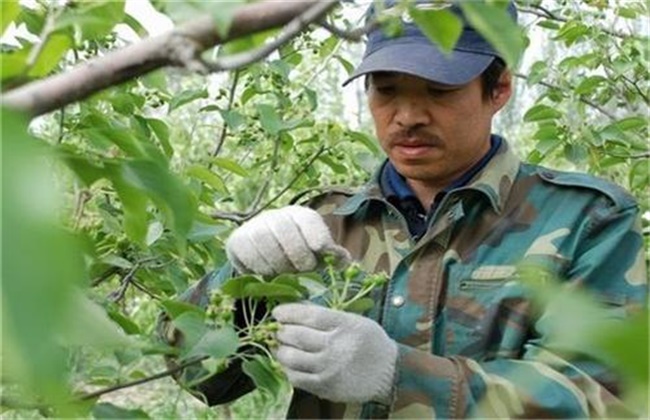
1. Reasons for Thinning Flowers and Fruits on Waxberry Trees
Waxberry is an evergreen fruit tree and generally has the characteristic of bearing heavily one year and producing fewer flowers the next, so waxberry requires reasonable control of the leaf-to-fruit ratio, leaving more fruit on strong trees and fewer on weak trees, and thinning flowers and fruits according to the shoots. Waxberry flowers and fruits should be thinned early and evenly so that fruit quality is excellent, ripening is earlier, and rotten and dropped fruit are relatively few. Generally, 1-2 fruits on fine and short shoots, 2-3 on thick shoots, and 1-2 where there is no spring shoot above the fruit; when thinning, small fruits, diseased and insect-damaged fruits, and deformed fruits should also be removed at the same time, to regulate the tree's vegetative growth and reproductive growth.
2. Flower Thinning by Heading Back Bearing Shoots
This method is generally carried out in February to March. For on-year trees with excessive flower bud differentiation, evenly head back one-fifth or two-fifths of the bearing shoots over the whole tree, and at the same time thin out the fine, weak and densely growing bearing shoots, while applying 0.5-1 kg of urea per tree to encourage the growth of more vegetative shoots.
3. Chemical Flower Thinning
This method is suitable for on-year trees at full bloom. This method thins 30%-50% of the flowers, and can also enlarge waxberry fruit, advance ripening and increase the proportion of high-quality fruit. For young trees or off-year trees, gibberellin can be sprayed after harvest, once every 10 days, for 2-3 consecutive times, to increase the appropriate amount of autumn shoots and inhibit flower bud formation.
4. Manual Fruit Thinning
Fruit thinning is one of the most effective and simplest methods to overcome the alternate bearing of waxberry, but manual fruit thinning is time-consuming and labor-intensive and is rarely used in production areas. Manual fruit thinning generally needs to be done two or three times. The first is carried out 20 days after full bloom, when the fruit has grown to the size of a peanut, mainly thinning dense fruit, small fruit and cracked fruit; the second is carried out when the fruit diameter is about one centimeter, mainly thinning small fruit and inferior fruit.
The above is an introduction to waxberry flower and fruit thinning techniques. We hope it helps you. To learn more related knowledge, please stay tuned to us.