What are the growing environment and conditions for cherries?
When growing fruit, the right environment and natural conditions have a huge impact on yield, and this is even more true for fruit trees like cherries. If you want to grow cherries locally, you must first figure out whether the environment is suitable. The large yield gaps among many growers are, to a great extent, affected by environmental factors.
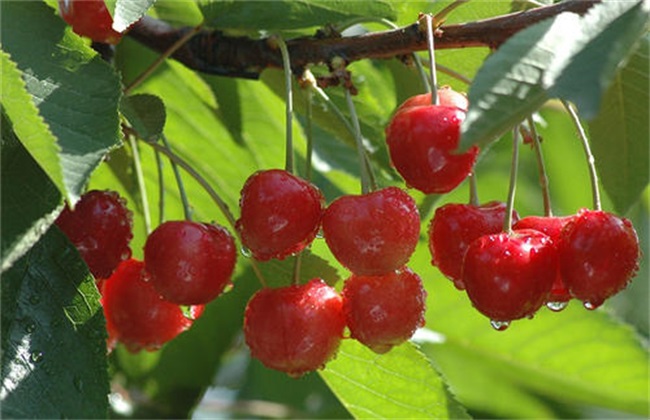
1. Growing environment
The cherry itself is quite adaptable, and traces of its cultivation can be found in many places, but in most of these places it is grown by rural people for their own consumption, with relatively low yields. Its growing sites tend to be at relatively low altitudes. Most hills and flat land in the south can be considered for planting, and altitudes of around 300-500 m can be considered. It likes composted soil layers, and the soil layer should be somewhat thick, but the viscosity must not be too high. It is best if it has a certain sandy loam character, as this provides the nutritional foundation.
The cherry tree is also a sun-loving fruit tree. It can basically survive at temperatures of 15-30°C, and beyond that it is prone to problems, which also imposes limits on growing cherry trees in many places. The cherry tree itself has a very short dormancy period. If the low-temperature period in winter is too long, planting is not recommended, because as time goes on the cherry tree will revive very quickly, and if the low-temperature period is long, the fruit trees may freeze to death. Its rainfall requirements are not very high. Most orchards today can solve this problem through irrigation, but long-term drought will cause the quality of the fruit to decline somewhat. Generally, rainfall of around 700-1000 mm is basically acceptable.
2. Natural conditions
When growing cherries, in addition to natural factors such as temperature and humidity, some natural factors must also be taken into account, such as strong winds, dry seasons, rainy periods, and so on. If these are unsuitable, planting is also not recommended. The cherry tree is one of the fruit tree varieties with the poorest resistance to strong winds. Ordinary cherry trees do not grow large, and the fruit is also relatively small. Fruit drop in windy weather is extremely serious, and during the flowering period there are many blossoms, so when strong winds come they can basically blow them all off. It is best to choose a planting site that is sheltered from the wind, so that failure does not occur right after planting because of strong winds.
As mentioned earlier, cherry trees like airy and relatively fertile soil, so natural drought and waterlogging will have a relatively large impact on cultivation. Generally, minor drought and short periods of continuous rain can seriously threaten the yield of cherry trees. In the event of a larger disaster, mass death is also normal. So if such conditions occur relatively frequently in the local area, planting is not recommended, as the yield and reliability are not high. Secondly, if salinization of the land occurs locally, it is best to solve this problem first before planting.
The above are some of the requirements of cherry trees for the growing environment and natural conditions. This is also why, although there are people growing cherry trees in many places now, the output on the market is still so small: because in many places what is grown basically cannot be sold, and is all eaten by the growers themselves. If you want to plant, you should also consider these factors.