What are the key management techniques after grafting cherry trees?
Cherries are a very common fruit in our daily lives and are popular with many people. When growing cherries, the propagation work is very important. Nowadays, cherry propagation is generally based on grafting, and after the cherry tree is grafted, its management work is very important. So how should it be managed after cherry grafting? Below, the editor brings you the management techniques after cherry grafting. Let's take a look!
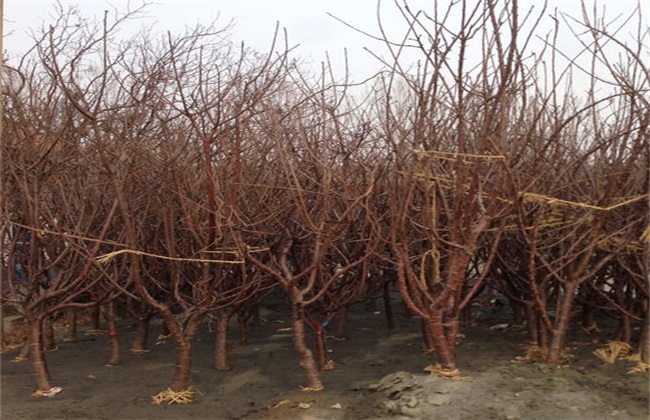
1. Cutting the rootstock and removing sprouts
After the cherry tree graft has survived, or before it sprouts in spring, we should cut the rootstock about 1 cm above the cherry graft bud. Especially if buds sprout on the rootstock, the sprouts must be removed in time to ensure the graft bud sprouts and grows normally. Then we should also remove sprouts at least 3 times in a row. When the new shoot grows to more than 20 cm, insert a wooden stick or bamboo beside the seedling as a support. Then tie the new shoot to the support with film or thin rope to prevent the new shoot from being broken by the wind.
2. Fertilizer and water management
After grafting, to enhance the growth ability of the cherry grafted seedlings, we should also pay attention to strengthening fertilizer and water management. Water and fertilize properly according to the soil moisture content and the growth of the grafted seedlings. In the early growth stage, the fertilizer should be mainly nitrogen fertilizer, and then in the late growth stage, change the fertilizer to phosphorus and potassium fertilizer. After each topdressing, water appropriately, and then do a good job of cultivating and weeding. In order to improve the cold resistance of the grafted seedlings, before winter begins, we should control water and fertilizer well to avoid excessive water and fertilizer causing the cherry grafted seedlings to grow excessively and the tissues to be insufficiently developed.
3. Tying and pinching
The growth of the graft bud is relatively fragile, especially after sprouting, because it is not yet fully mature. Therefore, if it encounters a slightly stronger wind, the graft union is very prone to bending or even breaking. So after grafting, we must pay attention to doing the tying work well, as introduced above. Then pinch the cherry grafted seedling when it grows to about 75 cm tall. Simply remove about 20 cm from the tip, and under normal circumstances, in that same year it can be cultivated into a small young tree with about 5 branches. Note that the pinching time should not be later than the end of June.
4. Pest and disease control
During the growth period of cherry grafted seedlings, we should also focus on doing a good job of pest and disease control. Common ones include the small gray weevil, etc. After the grafted seedlings sprout, manual capture can be carried out. Or use crystal trichlorfon, etc. for trapping and killing. The main approach is still prevention. In June to July each year, choose fenitrothion emulsion or deltamethrin emulsion to control the small fruit borer. Finally, for pests such as leaf roller moths and slug moths, spray pesticides such as diflubenzuron and dichlorvos for control.
The above is a brief introduction to the management techniques after cherry grafting. That is all for today's introduction. This article is for reference only, and I hope it can help everyone!