Detailed Explanation of Key Management Techniques for Greenhouse Large Cherry
Cherry is now a relatively popular fruit in our country. Many people grow cherries mainly through open-field cultivation. However, using greenhouse cultivation is actually more beneficial for cherry yield and quality. It can effectively reduce various adverse phenomena, so how should we manage greenhouse cherry cultivation? Today, the editor brings you greenhouse large cherry management techniques. Let's take a look below!
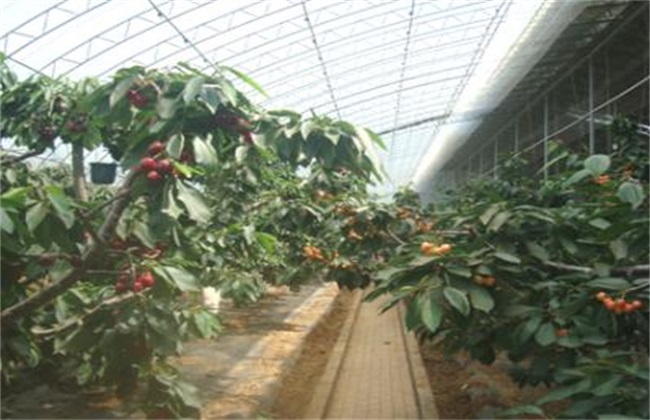
1. Drip irrigation under film
When many people grow greenhouse cherries, their watering method is mostly flood irrigation. In fact, this easily leads to excessively high humidity inside the greenhouse, which can easily cause poor pollination and fertilization during the cherry flowering period. It also easily causes excessive vegetative growth of branches and leaves after flowering, leading to insufficient nutrient supply to flower buds and young fruit, thus reducing the fruit-setting rate, and it is also highly prone to diseases. Therefore, we should mainly use drip irrigation under film for watering, supplying water regularly and in fixed amounts according to the needs of the cherry trees. This not only reduces water waste and avoids soil compaction, but also lowers humidity inside the greenhouse and improves the fruit-setting rate.
2. Plastic film mulching
When growing greenhouse large cherries, the plastic film mulch used is mostly black plastic film. Although black plastic film has strong heat preservation and can prevent weed growth, its light transmittance is very poor, which affects the increase of soil temperature. This is also a major factor causing low greenhouse soil temperature and uneven cherry flowering. Therefore, when covering with plastic film, it is best to mainly use white plastic film. Data show that to raise the soil temperature of about 20 cm to 15 degrees, black plastic film takes about 11 days, while white film takes only 8 days. As for weeds, we can remove them by hand.
3. Laying reflective film
During cultivation, large cherries generally show poor coloring. Besides causes such as excessive nitrogen fertilizer, insufficient potassium fertilizer and trace elements, and unsuitable temperature, the greenhouse film blocking sunlight transmission is also a major factor. To reduce losses caused by this situation, we should lay reflective film well under the canopy and at positions such as the trunk and central leader of the tree body. This improves the light environment in the inner canopy and lower part of the cherry tree, maximizes sunlight utilization, enhances photosynthesis of the tree body, and promotes earlier coloring of the fruit.
4. Foliar fertilizer application
When spraying foliar fertilizer on large cherries, we should pay attention to controlling the application of inorganic foliar fertilizer. If too much inorganic foliar fertilizer is applied, it will affect root growth. Therefore, during cultivation, according to the growth pattern and actual conditions of large cherries, at the critical period of fertilizer demand, we should targetedly choose some organic foliar fertilizers with fast absorption rates and sufficient nutrition, such as amino acids and humic acids. This not only supplements nutrients, but also does not hinder the absorption of inorganic nutrients by large cherries, improving the flowering and fruiting rate of large cherry trees.
The above is a brief introduction to greenhouse large cherry management techniques. That's all for today's introduction. This article is for reference only, and we hope it can help everyone!