Analysis of the Causes of Few Watermelon Pollen and Control Measures
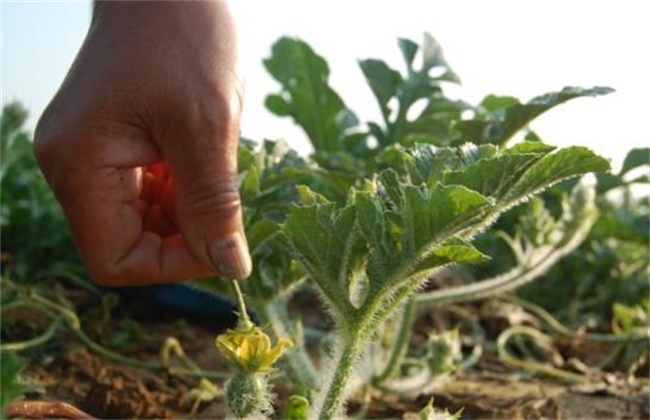
During watermelon cultivation, the phenomenon of male watermelon flowers producing little pollen is often encountered, which affects the pollination and fertilization rate and seriously affects yield and quality. So what causes few watermelon pollen? And how should it be controlled? Let's take a look together.
1. Fertilizer and water causes
Before flowering and fruit setting, on the basis of applying sufficient base fertilizer, fertilizer and water can be used sparingly, with control as the main approach. If watering is excessive or nitrogen fertilizer is applied in a one-sided way, it easily causes vine overgrowth, resulting in uneven nutrient distribution, poor flower bud differentiation, and the phenomenon of little pollen.
Control measures: Before flowering, fertilizer and water should be controlled to prevent plant overgrowth. If the base fertilizer is insufficient, it is recommended to apply biological fertilizer by drenching or root irrigation, or spray water-soluble fertilizer, to timely supplement during the flowering period's cloudy and rainy conditions and promote flower organ development.
2. Light causes
In the early growth stage of watermelon, because of low temperatures, heat preservation is needed. If multi-layer plastic film covering is used, it will greatly reduce light intensity. In a low-light environment, flower bud differentiation is relatively poor, pollen development is poor, resulting in little or no pollen. If continuous cloudy and rainy days occur, the light will be even worse, and there will be no pollen when male flowers open.
Control measures: When the temperature is suitable, remove the covering as early as possible to increase light intensity, improve the quality of flower bud differentiation, and promote pollen quantity.
3. Root causes
In watermelon management, the root system is often damaged due to agricultural operations, such as soil compaction and drought or flood irrigation, causing waterlogging in the field, damaging the root system, resulting in insufficient nutrient supply, poor flower bud differentiation, poor pollen development, or little pollen.
Control measures: During cultivation, the soil should not be allowed to become too dry or have field waterlogging that damages roots. When planting, it is recommended to choose sandy soil, cultivate on ridges, apply more base fertilizer, improve soil aggregate structure, promote nutrient transformation and absorption, and increase the fruit setting rate.
4. Nutritional causes
Many medium and trace elements directly participate in plant flower bud differentiation and pollen development, such as boron, calcium and other nutrient elements. Once the plant lacks them, flower bud differentiation will be affected and pollen development will be poor.
Control measures: Before budding, hormones can supplement various medium and trace elements to prevent the phenomenon of little or no pollen caused by deficiency symptoms.
The above is an introduction to the causes of few watermelon pollen and control measures. We hope it can help you. To learn more related knowledge, please follow us.