What to do when citrus suffers from waterlogging? These remedial measures you need to master
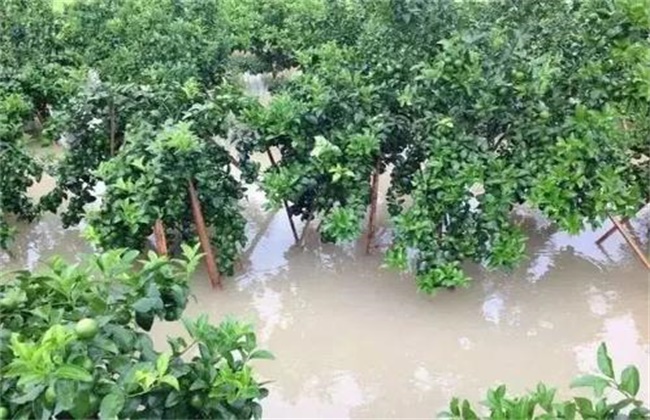
There are many cloudy and rainy days in spring. In low-lying areas and riverside citrus orchards, plants are very prone to flooding in spring, and the accumulated water often cannot be drained away in time. In addition, the high groundwater level and high soil water content can cause root weakening, slow growth, and even death. So how should citrus be remedied after waterlogging damage? Let's learn about it together.
1. Drainage and cleaning
For affected orchards, ditches and channels should be dug in time to quickly drain away the accumulated water, lower the groundwater level as much as possible, accelerate the drying of the surface soil, and reduce root damage. For plants that have been submerged for a relatively long time, part of the branches and leaves should be pruned in time to reduce water evaporation and speed up root recovery. The sludge on the branches and leaves should also be cleaned off to ensure good photosynthesis and promote plant recovery.
2. Proper pruning
For fruit trees knocked down by heavy water, supports should be set up promptly to hold them fixed, but note that care should be taken during the operation to avoid causing secondary damage to the remaining roots. For roots exposed due to rain washing, soil should be banked up to cover them. At the same time, the tree body should be properly pruned to reduce leaf evaporation and prevent leaf cell dehydration and death caused by intensified transpiration.
3. Loosen the soil at the right time
In citrus orchards that have suffered waterlogging damage, even if drainage is timely, soil compaction will still occur afterward, which is extremely unfavorable to root growth and recovery. Therefore, after drainage, choose a sunny day to loosen the soil at the right time, maintain soil permeability, increase the oxygen content of the roots, and prompt the plants to recover as soon as possible. At the same time, the soil should also be sterilized and disinfected to prevent the occurrence of diseases and pests. Lime powder can be spread over the whole orchard.
4. Apply fertilizer in time
After the tree body suffers waterlogging damage, the roots are damaged, causing respiration to weaken. At this time, the roots' ability to absorb mineral nutrients is reduced, so foliar fertilization is the best way to supplement nutrients. You can choose potassium dihydrogen phosphate and products with regulating effects such as amino acids, seaweed acid, and humic acid for foliar topdressing, spraying once every 5-7 days for 2-3 consecutive sprays. After the tree vigor recovers, carry out root-zone fertilization in time. It is recommended to do it together with soil loosening, as this can improve fertilizer utilization and speed up tree recovery.
The above is an introduction to remedial measures for citrus waterlogging damage. We hope it can help you. To learn more related knowledge, please stay tuned to us.