How to prune navel orange trees? Pruning methods and technical key points
Navel orange cultivation is very common in China. Navel oranges have high yields and very considerable economic benefits, which has attracted many people to grow them. When growing navel oranges, we need to do a good job in management, especially pruning work. Reasonable pruning is a key measure to ensure the yield and quality of navel oranges. So how should we prune navel oranges when growing them? Today, the editor brings you the pruning methods for navel orange trees. Let's take a look below!
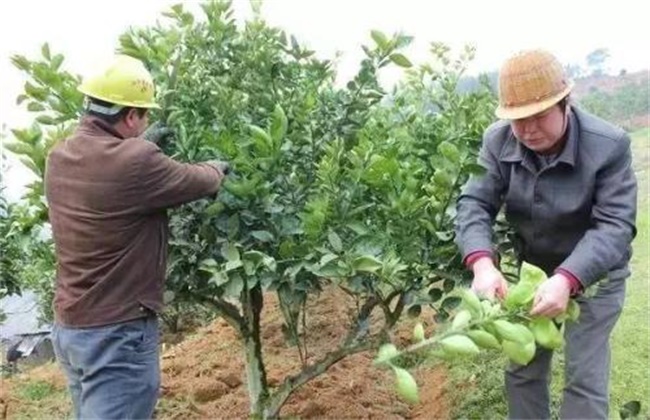
1. Short pruning and thinning pruning
Short pruning is what we often call heading back, that is, cutting off part of a one-year-old branch and then retaining a portion of the original branch. Heading back is mainly to stimulate sprouting below the cut on the navel orange, promote the emergence of new vigorous shoots, and enhance the growth capacity and fruiting ability of the navel orange. Thinning pruning is cutting the branches of the navel orange tree off from the base. Thinning pruning can promote the retained branches to thicken and lengthen, improve the permeability inside the tree, and enhance photosynthesis in the leaves of the navel orange tree, which is very beneficial to flower bud differentiation. It can significantly improve the fruit-setting rate and fruit quality of navel oranges. Thinning pruning mainly targets diseased and pest-infested branches, water sprouts, and excessively long branches, following the principle of removing the weak and keeping the strong.
2. Bud removal and shoot release
Bud removal for navel oranges should generally be carried out when the summer and autumn shoots grow to about two centimeters, removing some useless young buds that are not needed. Then, after repeated bud removal, when bud removal is no longer needed, allowing a large number of buds to sprout at the same time is called shoot release. Because navel oranges have compound buds, for some scattered early-sprouting buds, removing them will cause other surrounding buds to germinate, thereby producing a large number of new shoots, so attention should be paid to repeated removal many times until the time of shoot release stops. It is mainly used to remove summer shoots from navel orange trees, avoiding summer shoots competing for the growth nutrients of young fruit and causing fruit drop.
3. Pinching and delaying
Pinching is actually a type of short pruning, and proper pinching is very beneficial to the growth of branches and shoots. It can increase nutrient accumulation in the tree and enhance the growth capacity of branches and shoots. When new shoots grow to a certain length and have not yet become woody, simply pinch off the top of the tender shoot. In July, pinch off the extension shoots and water sprouts of summer shoots to promote branching. Then in October, pinch the long shoots, which is beneficial to flower bud differentiation. Delaying means not pruning the branches that grow within one year on the navel orange at all, letting them grow until flowering and fruiting. The main target is the fruiting mother branches.
4. Retraction and girdling
Retraction is cutting off some perennial branches from the branching point of the navel orange tree. It is generally used on adult trees where the tops of large branches have declined or there are few branches inside the canopy, to renew the large branches of the canopy. It can improve the permeability inside the canopy and enhance tree vigor. Girdling is cutting off the phloem of a branch with a small knife all the way to the xylem, but without damaging the xylem. It is mainly to limit the transport of the phloem, prevent nutrients from being transported to the lower part of the navel orange tree, and increase nutrient accumulation above the girdled part.
The above is a brief introduction to the pruning methods for navel orange trees. That is all for today's introduction. This article is for reference only, and I hope it can help everyone!