What are the requirements of navel oranges for the growing environment?
The navel orange is a sweet orange variety of the Rutaceae family, and its planting area in our country is very large. In our country it has a very large planting area, the economic life of the navel orange is very long, the fruit has high nutritional value, and its economic value is relatively high. However, when we grow navel oranges, we need to take the growing environment of navel oranges into consideration. So what environment is needed to grow navel oranges? Today the editor has brought you the growing environment of navel oranges, so let us take a look below!
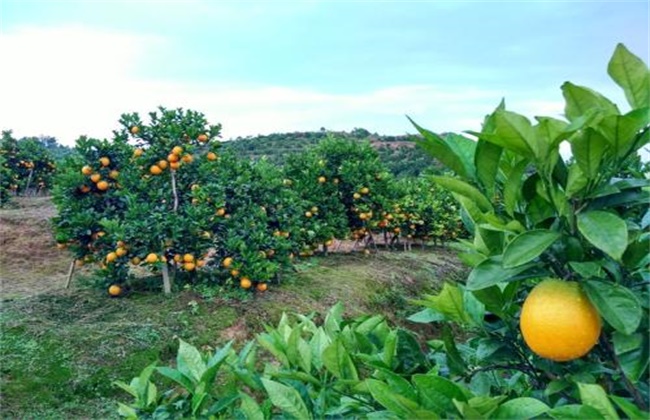
1. Moisture requirements
When growing navel oranges, the first thing to consider is the moisture requirement. The navel orange fruit itself contains a great deal of water, so when we grow navel oranges, the soil layer thickness must not be less than 80 cm, and it is best to keep it above 1 m. At the same time, the annual rainfall in the growing area must remain above 1000 mm. When planting, it is not suitable to plant in farmland, because the groundwater level of farmland is very high. In summer, when there is a lot of rain, waterlogging is prone to occur, which is very unfavorable to the growth of navel oranges. If planting in farmland is unavoidable, then deep furrows and high beds should be used as the main planting method, but it is best to plant on hilly slopes.
2. Soil requirements
The navel orange has very strong growth ability and is not very strict about soil requirements; whether it is red soil or alluvial soil and so on, it can adapt normally and can live on most soils. However, differences in soil will have a certain impact on the yield and quality of navel orange fruit. So when we grow navel oranges, we should mainly use soil that is deep, fertile, well aerated and soft. The soil pH value should remain around 6-6.5, so sandy loam soil is best. If red soil is properly improved, it can also be used to grow navel oranges.
3. Climate requirements
The growth of navel oranges still has certain requirements for temperature; navel oranges are suitable for growing in an environment with an average annual temperature of around 20 degrees. During their growth period, if the temperature is greater than or equal to ten degrees, then the annual accumulated temperature should remain around 4600-4700 degrees. The minimum temperature in winter must not be lower than minus five degrees, and by January its average temperature should remain above 8 degrees. Then for air humidity, it should remain around 70%-75%. Maintaining a relatively large temperature difference between day and night and a relatively long frost-free period is very favorable to the growth of navel oranges.
4. Orchard site conditions
The orchard for growing navel oranges should be set up on gently sloping land of around 25 degrees. Ensure sufficient sunlight, deep soil and normal drainage and irrigation, minimize investment, and ensure convenient management. If planting on flat land or in paddy fields, then deep furrows and high beds should be used as the main planting method to improve drainage capacity. Planting on flat land is relatively convenient to manage, water sources are sufficient, and it is very favorable to the root development of navel orange trees. However, its ventilation and sunlight and so on are not as good as mountain planting. When building the orchard, pay attention to the groundwater level to avoid waterlogging; in addition, transportation also needs to be taken into consideration.
The above is a brief introduction to the growing environment of navel oranges. That is all for today's introduction. This article is for reference only, and I hope it can help everyone!