Detailed Explanation of Key Techniques for Watermelon Seedling Cultivation in Greenhouses
Watermelons can be divided into open-field cultivation and greenhouse cultivation. The latter is relatively simpler to manage and also tends to produce higher yields. Using greenhouses for seedling cultivation is one of the key tasks in the watermelon growing process, so farmers must understand and master the relevant technical knowledge of watermelon seedling cultivation in greenhouses. Below, the editor brings you the key techniques for watermelon seedling cultivation in greenhouses. Let's take a look.
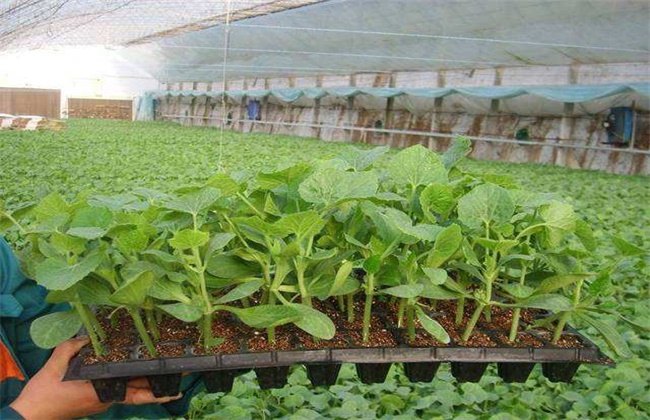
1. Building the Seedling Greenhouse
Because temperatures are low in winter, greenhouse management needs to be carried out day and night, so the seedling greenhouse should be chosen in a sunny spot close to home. The floor area of the seedling greenhouse should be determined by the number of seedlings to be raised, and the structure of the greenhouse is similar to that of a general greenhouse. Winter has short daylight hours with low temperatures and scant sunlight, and raising the temperature mainly relies on burning stoves for control. Since the seedling greenhouse occupies a large area, energy consumption is relatively high, so in order to save energy, the area of the seedling greenhouse should be appropriately sized, with an east-west orientation. A greenhouse generally has 2 heating stoves built in it, one at the west end of the greenhouse, centered in the north-south direction; the other stove is set near the southeast corner inside the greenhouse, with the chimney running from south to north.
2. Sowing and Seedling Cultivation
The nutrient soil is generally made by mixing high-quality decomposed organic fertilizer with soil, and compound fertilizer can also be mixed in, but pay attention to the amount used. Generally, 0.5-1 kg is added per 1000 seedlings. Never use nitrogen fertilizer. At the same time, an appropriate amount of fungicide and insecticide can also be mixed in. In order to enhance the cold resistance of the seedlings and promote seedling growth and development, the germinating seeds are subjected to alternating high and low temperature treatment. First place the germinating seeds in a sub-zero environment for 15-18 hours, then place them in a 20 degree environment for 12-15 hours. During the germination process, attention should be paid to maintaining moisture to prevent the seeds from dehydrating. When the young sprouts grow to 0.5 cm, sow them.
3. Grafting
Grafting is generally carried out when the watermelon has one true leaf and one heart leaf. After the watermelon seedlings emerge, the earlier the grafting, the higher the survival rate. Combine this with the weather forecast and choose a sunny day for grafting. On the day before grafting, water thoroughly and cover with plastic film. After sunrise the next day, the dew on the film can provide shade, and then use the straw mats on the greenhouse to provide dappled shade. During grafting, maintain a high-temperature and high-humidity environment. For one week after grafting, pay attention to controlling the daytime temperature between 30-36 degrees and the nighttime temperature above 20 degrees. When there is low temperature and scant sunlight, remember to burn stoves to raise the temperature.
4. Management After Grafting
Before grafting, water the rootstock and seedling bed thoroughly so that the seedling bed reaches a state of water saturation. For three days before grafting, pay attention to heat preservation and shading. During the day, control the seedling bed between 26-2 degrees, and at night it must not be lower than 20 degrees, with relative humidity at 100%. After three days, light can be seen in the evening, and gradually ventilate and expose to light for hardening off the seedlings. After the grafted seedlings survive and recover, ventilate, generally at noon. The larger the seedlings grow, the longer the ventilation time. Even on cloudy days, ventilation must be continued until the three-leaf-one-heart stage, when ventilation is carried out day and night. After the grafted seedlings survive, promptly remove the tiller buds of the rootstock. When the seedlings produce the third true leaf, they can be transplanted and planted.
The above is an introduction to watermelon seedling cultivation techniques in greenhouses. We hope it can help you. If you want to learn more related knowledge, please stay tuned to us.