How to lift pomegranate tree seedlings? Detailed explanation of methods and precautions
Pomegranate tree cultivation and management are extremely important, and in the planting and management of pomegranate seedlings, seedling lifting is the first step of cultivation, and the root system affects the quality of the seedlings and the survival rate of planting. So how should pomegranate tree seedlings be lifted? What should be noted? Let's take a look together.
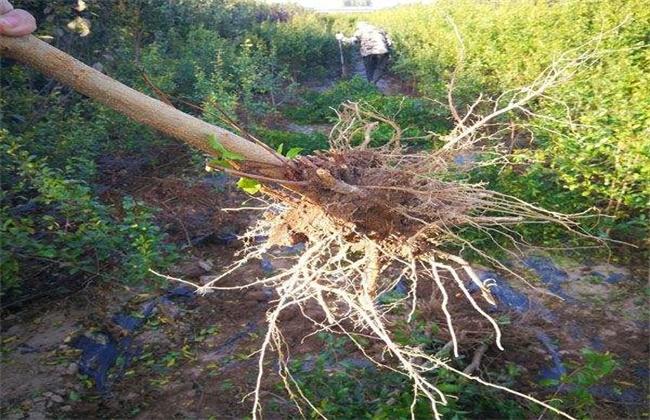
I. Lifting seedlings with soil
When lifting pomegranate tree seedlings, the method of lifting with soil is generally adopted. This method not only gives a high survival rate, but is also convenient in several ways. Generally, the radius of the soil ball for lifting should be 5-10 times the diameter of the root collar, and the height should be about 2/3 of the soil ball diameter. If the soil ball is too small, survival becomes difficult; if the soil is sandy loam or the transport conditions are poor, then the soil ball should not be too large, otherwise it is very easy for it to crumble. For large seedlings, the branches and leaves should first be tied up to reduce volume, so as to facilitate lifting and transport. When thicker lateral roots are encountered during lifting, they should be cut off with pruning shears or sawed off with a hand saw to prevent the soil ball from shaking and crumbling. After lifting, it should be packed with straw rope, or wrapped with cattail bags, straw, or wheat straw, to ensure the soil ball remains intact, with a smooth surface, tight packaging, and no soil leaking from the bottom.
II. Precautions for lifting seedlings
1. Nursery release standards and timing
Pomegranate seedlings should only be released from the nursery when the upper branches are robust, maturity is good, buds are plump, the root system is sound, there are many fibrous roots, and there are no diseases or pests. Seedling lifting should be carried out during the dormant period. In spring, lifting should be done early, before the seedlings begin to sprout. If lifting is done after the buds open, the survival rate of the seedlings will be greatly reduced. In autumn, lifting should be carried out after the aboveground parts of the seedlings stop growing; at this time the root system is growing, and if planted promptly after lifting, growth can begin in the following spring. In addition, spring lifting can also reduce the heeling-in process.
2. Seedling lifting methods
First, the depth of lifting should be based on the root distribution pattern of the tree species, and it is better to go deep than shallow. Too shallow easily damages the roots, and the roots of lifted seedlings will lose water, which can very easily lead to a low planting survival rate or weak growth, so root damage should be minimized as much as possible. In addition, water should be applied before lifting, because winters and springs are dry, the nursery land is dry, and the soil is very prone to hardening, making lifting relatively difficult. Therefore, it is best to water the nursery land 4-5 days before lifting, so that the seedlings can absorb enough fertilizer and water in the nursery and have a relatively sufficient nutrient reserve. This can not only keep the seedling root system intact, but also increase the seedlings' ability to resist drought.
The above is an introduction to pomegranate tree seedling lifting methods and precautions. We hope it can help you. To learn more related knowledge, please keep following us.