What are the causes of sugarcane lodging and the preventive measures?
In the process of growing sugarcane, farmers often encounter the phenomenon of sugarcane lodging, which is extremely unfavorable to sugarcane growth and may also lead to large-scale plant death. So what causes sugarcane lodging? Let's learn about it together.
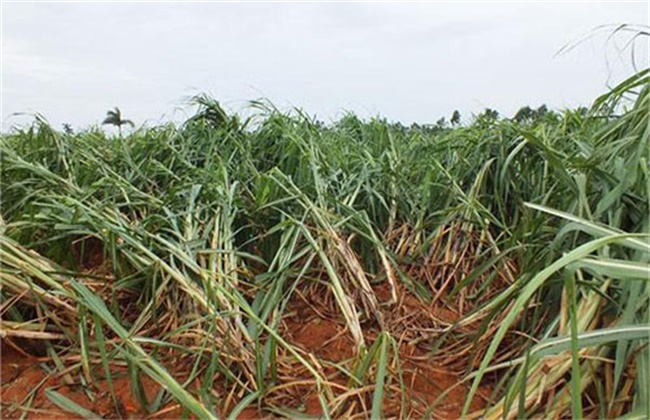
1. Causes of sugarcane lodging
In the middle and late stages of sugarcane elongation, the plants are tall and have relatively many leaves. If they are hit by wind and rain at this time, lodging is very likely to occur. Especially after rain, when too much water accumulates at the tail end of the sugarcane, lodging will occur as soon as wind comes. After sugarcane lodges, the stem nodes near the ground are very likely to sprout aerial roots and send out lateral buds, making the originally upright stalks become bent. In addition, because the nutrients in the internodes are consumed in large amounts, hollowing or pithiness occurs. This causes severe reduction in sugarcane yield, a decline in sugar content, and poor ratoon development, and it also has a great impact on planting in the following year.
2. Effects after sugarcane lodging
After sugarcane lodges, its leaves overlap with one another, reducing the area available for photosynthesis, so very few nutrients are synthesized. Moreover, after lodging, its roots and stems are damaged or directly broken, so the absorption and transport of nutrients by the root system are also hindered, making hollowing and pithiness very likely to form. Such sugarcane has no commercial value at all. In addition, after lodging, the stem nodes sprout a large number of aerial roots, causing lateral buds to sprout and grow in large numbers. This causes a major decline in the sugar content of sugarcane and leads to severe yield reduction. Also, because after lodging the leaves cover the ground, this creates the best place for pests, diseases, and rodents, and broken roots can also affect the sprouting of ratoons in the following year.
3. Preventive measures
When selecting varieties, choose varieties with strong wind resistance and lodging resistance. In hilly areas, choose plots that are sheltered from the wind and face the sun for planting, and in plains areas choose places with windbreak forest belts for planting. This can greatly prevent lodging caused by strong winds. When planting, persist in deep plowing and plant appropriately deep, so as to promote the roots to grow deeply downward and enhance the plant's lodging resistance. Fertilize reasonably, do not apply excessive nitrogen fertilizer, and rationally combine nitrogen, phosphorus, and potassium fertilizers to enhance the toughness of sugarcane. Earth up in a timely manner and appropriately increase the height of earthing up. After rain, drain water and reduce waterlogging in a timely manner, lower the groundwater level, and encourage the roots to grow deeply and abundantly. Before strong winds arrive, strip leaves and bundle the sugarcane, tying three to five adjacent rows of sugarcane into bundles in a herringbone shape to enhance mutual support. After the wind, straighten the lodged sugarcane in a timely manner, add soil and tread it firm, and apply a small amount of nitrogen fertilizer in a timely manner.
The above is an introduction to the causes of sugarcane lodging and preventive measures. I hope it can help you. To learn more related knowledge, please keep following us.