What to Do About the Low Survival Rate of Bayberry Planting? Causes and Control Measures
Bayberry has high vegetable value, and many fruit growers have taken up large-scale planting. However, many farmers report that during the planting process, the survival rate of bayberry is low and the young trees are difficult to keep alive, causing certain economic losses for the fruit growers. Below, the editor has compiled the causes of the low survival rate of bayberry and the countermeasures, hoping to help everyone.
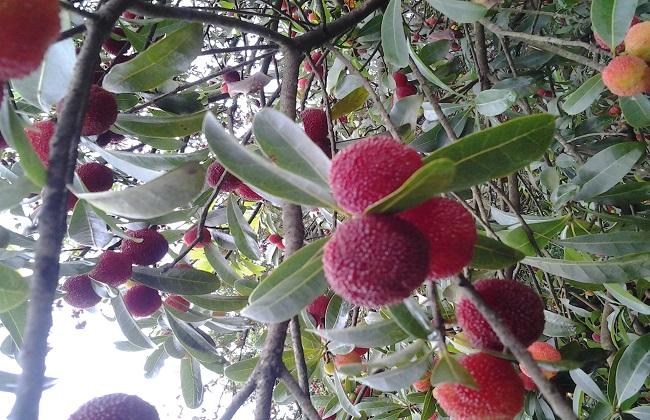
I. Causes of the Low Survival Rate of Bayberry
The causes of the low survival rate of bayberry planting are complex and varied, among which improper planting is the main cause of the low survival rate. Let's take a look. First, the selection of seedlings before planting is not up to standard, mainly because the root system of the plant is shriveled and not well developed, making the plant thin and weak, and causing dehydration during transport, which makes it difficult to survive after planting. During the planting process, fixing is very important, and many issues need attention. If planting is too shallow and the surface soil coverage is low, while the photosynthesis and transpiration of the bayberry continue as usual, the plant will suffer severe water shortage and lose its drought resistance. This is another important cause of the low survival rate. After planting, one should not relax on water management either; water should be replenished according to abnormal temperature changes.
II. Measures to Improve the Survival Rate
1. Choose strong seedlings
The main point is to select high-quality bayberry plants, choosing those with well-developed root systems and thick, strong roots and stems, so that the plants will not appear thin and weak when planted. However, during the transplanting and transport process, water retention work must be done well to reduce the transpiration of the plant as much as possible. The root system of the plant can also be wrapped with plastic wrap to reduce water loss.
2. Planting time
When planting bayberry, the climate should not be too hot or too cold, so the best time for planting is from late February to March. If cloudy and rainy days are chosen for planting, the transpiration of the plant will be reduced and the survival rate of the plant will be improved.
3. Selection of the planting site
A comprehensive judgment and selection should be made according to location, terrain and topography, and soil. Bayberry likes heat, moisture and acidic soil, so when choosing, try to select northern mountain hills with loose, fertile, acidic soil.
4. Pest and disease control
Pests and diseases are also important factors affecting the survival rate of plants. There are many kinds of pests and diseases, and their control methods are not the same. In order to improve the survival rate of plants, targeted measures must be taken for different pests and diseases. For pests still in the incubation period, the plants can be inspected and the larvae removed and prevented. For adult insects, the best control method is to use their habit of liking dark places, drive them away under lamplight, and set traps and obstacles to capture and kill them. For diseases, it is necessary to strengthen fertilizer and water control, enhance resistance to diseases, and isolate and remove diseased plants when found.
The above is an introduction to the causes of the low survival rate of bayberry planting and the control measures. We hope it can help you. If you want to learn more related knowledge, please stay tuned to us.