Key Points and Methods of Grape Root Restriction Cultivation Explained
I believe everyone has heard of grape root restriction cultivation. This cultivation method greatly reduces the area needed for soil tillage, fertilization, and irrigation, substantially saving the amount of soil, fertilizer, and water used. It also enables semi-automated and labor-saving fertilizer and water management, greatly reducing labor costs, improving fruit quality, and increasing economic returns. So how should grapes be cultivated with root restriction? What are the benefits of root restriction cultivation? Let's take a look together.
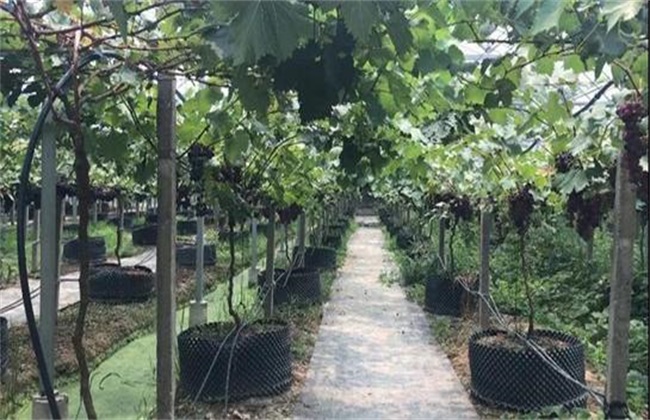
I. What Is Grape Root Restriction Cultivation
Grape root restriction cultivation refers to improving and controlling root growth within a fixed space, regulating the vegetative growth and reproductive growth of the above-ground parts, ensuring that more nutrients are transported to the berries, and reducing late-stage fruit cracking. This cultivation method uses fewer grapevines per unit, yet the yield per mu is more than 10% higher than with conventional methods, the sugar content of the fruit is also increased by 2 degrees, and the planting cost per mu is saved by about 800 yuan.
II. Key Points of Root Restriction Cultivation
This cultivation technique involves growing grapes in soil with ultra-high organic matter content, thereby ensuring the quality of root growth and root respiration. Its fertilizer and water management is completely different from conventional cultivation. In conventional cultivation, fertilizer is applied into the soil, and only after being buffered by the soil is the fertilizer absorbed by the roots. In root restriction cultivation, fertilizer directly contacts the roots, restricting the roots to a certain area, triggering a large number of absorptive roots, and improving fertilizer absorption and utilization efficiency. It is precisely because fertilizer directly contacts the roots that an integrated fertilizer-water supply must be adopted, and the concentration of the fertilizer solution must be limited to avoid root damage from excessively high concentrations. At the same time, the content of harmful substances such as heavy metals in the fertilizer solution must also be limited. With this cultivation technique, no fertilization is needed at the base in the early stage. After 3-4 years of cultivation, the container can be appropriately expanded while supplying enhanced water-soluble organic fertilizer.
III. Grape Root Restriction Cultivation Techniques
1. Ridge-style cultivation
This refers to laying microporous non-woven fabric or plastic film on the ground, then piling organic-matter-rich original soil on top in a ridge shape, and then planting grapes on the ridge. This method is suitable for areas where the piled soil does not freeze much, but in summer the soil moisture and temperature stability in the root zone are relatively poor.
2. Box-and-basket cultivation
Box-and-basket structures or brick and stone structures are used as root-restriction cultivation containers, filled with mixed soil to cultivate grapes. The gaps along the lower edge of the box frame where it contacts the soil can allow excess water to drain away to avoid water accumulation. The disadvantages of this method are water shortage in the root zone, unstable temperature, and poor resistance to low temperatures.
3. Pit-style cultivation
A pit of a certain volume is dug in the ground. The four walls and bottom of the pit are lined with membrane materials such as microporous non-woven fabric that allow water to pass through but that roots cannot penetrate. After filling with nutrient soil, the tree is planted inside.
The above is an introduction to grape root restriction cultivation techniques. I hope it can help you. To learn more related knowledge, please keep following us.