A detailed guide to wampee (Clausena lansium) seedling propagation techniques, teaching you how to grow strong fruit seedlings
The wampee tree is a tree species with relatively high economic value, its planting advantages are fairly obvious, and its yield is high, generally 3000-4000 jin per mu, and it takes only a short half month from flowering to fruiting, with low labor costs. To grow wampee, propagation is extremely important, so let's take a look at the propagation techniques for wampee together.
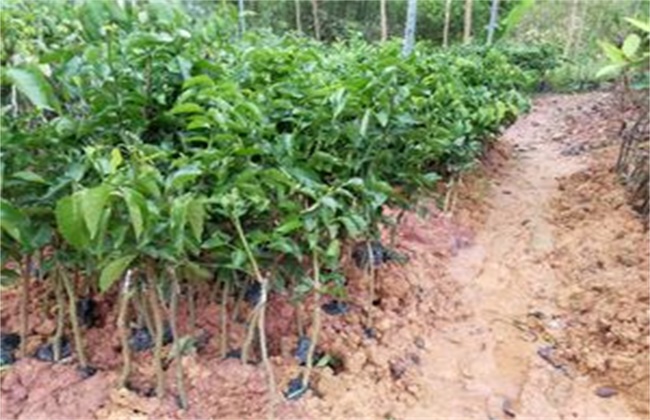
1. Rootstock cultivation
Take seeds from large-fruited, many-seeded, fully mature wampee fruit, wash the pulp and horny layer clean, dry them in the shade, and then sow them; fresh seeds have a high germination rate, and drying the seeds will lower the germination rate, so never expose them to strong sun. There are two sowing methods. One is direct sowing, sowing the seeds at a certain spacing between plants and rows, or sowing them in nutrient pots; this kind of seed benefits from soaking to promote germination, and they are sown when the seeds show white or the sprouts are within 1 cm long. The other is broadcast sowing, which requires fertile, well-drained land; make raised beds, level them, or build a sand bed in the nursery, then broadcast sow, with a seed spacing of 3-4 cm. After sowing, add 1 cm of loose fine sand, cover with grass and water to keep moist; after the seedlings emerge, remove the covering, strengthen fertilizer and water management and pest and disease control, and when the seedlings grow to 10-15 cm in the following spring, transplant them.
2. Grafted seedling cultivation
When the rootstock reaches 0.5 cm in diameter, grafting can be done. Grafting can be divided into spring and autumn, and the grafting methods include approach grafting, cut grafting, cleft grafting and patch budding. Approach grafting is carried out from March to June each year, but the survival rate is highest around Qingming; cut grafting and cleft grafting are done in March-April, taking scions from plump, mature current-year spring shoots or autumn shoots growing on the outer middle-upper part of the canopy of superior mother trees, and grafting at 15-20 cm above the ground on the rootstock. Patch budding is generally carried out in summer and autumn, opening a budding position on the rootstock trunk about 30 cm above the ground; the bud opening is generally larger than the bud patch, then cut the bud patch and insert it into the bud opening, tie it tightly with plastic film, and when the cut has healed, untie the film in time.
3. Orchard establishment and planting
The planting site should be in areas with an average temperature above 20°C, and the soil should be loose in texture and well-drained and irrigated, preferably close to a water source; avoid planting on heavy, compacted, dry land. Field planting is mainly in March-April or September-October, preferably with mature seedlings; planting density depends on the management method, soil and configured characteristics, generally 66 plants per mu. Before planting, dig the holes and apply sufficient base fertilizer; when planting, backfill with topsoil, green manure, miscellaneous manure, poultry and livestock manure mixed with calcium fertilizer, magnesium fertilizer and phosphorus fertilizer, each layer must be mixed evenly with soil, and finally backfill soil to 15 cm above the ground.
The above is an introduction to wampee propagation techniques. I hope it can help you. To learn more related knowledge, please stay tuned to us.