Detailed Explanation of Precautions for Transplanting Passion Fruit Seedlings
March is approaching, and all regions are entering the peak season for spring planting of passion fruit. Planting large seedlings in spring has the advantages of a high survival rate, a good root system, fast growth, and quick fruiting. However, most growers mainly plant seedlings. Although seedlings are very easy to keep alive, several points still need attention after transplanting. Let's take a look together below.
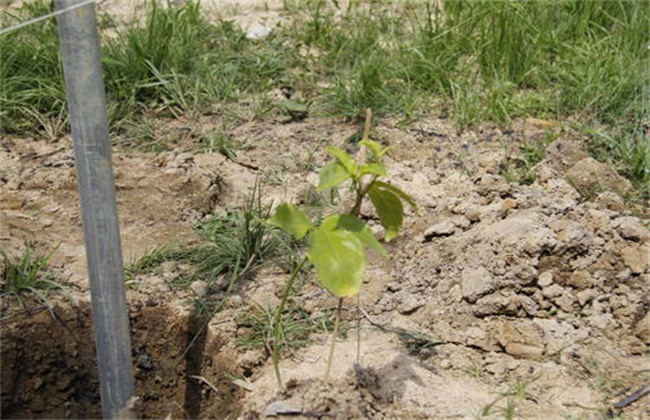
1. Suitable seedlings
When choosing seedlings for planting, the variety is crucial. Usually only seedlings with a good root system, robust plants, and no pests or diseases will have a high survival rate, so special attention must be paid before planting. In addition, for seedlings just cultivated from a greenhouse, in order to enhance their resistance, they should be properly hardened off before transplanting, so that after planting they can quickly adapt to the adverse field environment and shorten the recovery period as much as possible.
2. Suitable land
Passion fruit is a shallow-rooted plant. It likes a moist environment, is averse to waterlogging, and is also afraid of drought. Therefore, according to its growth habits, for large-scale planting, land that is rich in organic matter, well-drained, with deep soil, and a pH value of 5.5-6.5 should be chosen. If passion fruit is planted in paddy fields, then ditching for drainage and planting on high ridges should be combined. At the same time, attention should also be paid to staying away from factories and polluted water sources, to avoid the growth of passion fruit being affected by pollution.
3. Planting
Before planting, it is recommended to grade the seedlings by height, size, and root system, and transplant strong seedlings and weak seedlings separately for easier management later. When transplanting, it is advisable to sow when the temperature is stable above 10 degrees. Pay attention to the local weather forecast to prevent a late spring cold snap, and take protective measures to avoid freezing damage to the buds. When planting, generally 80-110 plants are planted per mu, and under normal circumstances 100 plants per mu is suitable, with the specific number based on the principle of convenience for labor and machinery operation. When planting, choose a cloudy day or a sunny day for sowing, dig planting holes according to the predetermined row and plant spacing, and it is best not to plant in old holes.
4. Precautions
Immediately after planting, water thoroughly once. For seedlings with weaker root systems, an appropriate amount of rooting agent and fungicide can be properly drenched on them. Base fertilizer should also mainly be commercial organic fertilizer. Farmyard manure must be fully decomposed and fermented before being applied. Some farmers often mix in compound fertilizer, so it must not be placed too close to the seedlings. Spring is also a period of pest and disease activity, which can easily bite off the stems of seedlings, so attention should also be paid to controlling underground pests.
The above is an introduction to the precautions for transplanting passion fruit seedlings. We hope it can help you. To learn more related knowledge, please stay tuned to us.