Detailed Explanation of Loquat Flowering Period Management Techniques
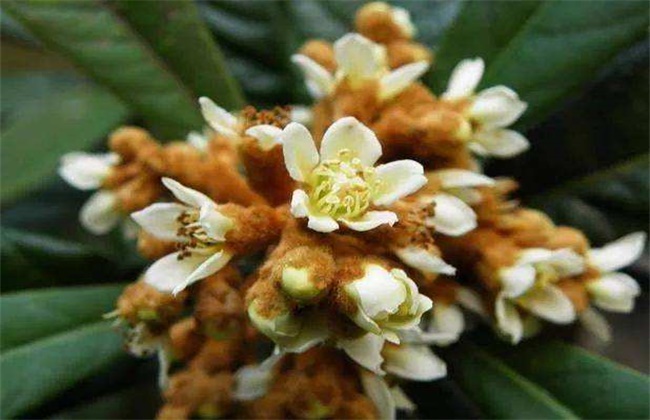
Loquat is a common fruit tree in southern regions. Its fruit is not only sweet-tasting but also highly valued, and the loquat's flowering period is extremely long. If the flowering period is not managed properly, it may result in poor fruiting and reduced yield. So how should the loquat flowering period be managed? Follow the editor to learn more about it.
1. Do a good job of fertilizing
Loquat blooms in autumn and winter, so after October, fertilizing work should be done well. This not only strengthens the loquat's nutrient reserves and prepares it for subsequent flowering and fruiting, but also enhances the loquat's cold resistance and drought resistance. For this fertilization, well-rotted organic fertilizer should be the main type. Organic fertilizer has uniform nutrients, is easily absorbed, and can also improve soil structure, significantly increasing the loquat's resistance and improving fruit quality. While applying organic fertilizer, some compound fertilizer and phosphorus-potassium fertilizer can also be mixed in to improve flower quality. However, when fertilizing, be careful not to apply it too close to the fruit tree, as this is not conducive to the outward expansion of the root system.
2. Assist fruiting
Loquat trees mostly bloom in winter, when insect activity is low, so in order to increase the fruiting rate, we can appropriately spray some agents to assist pollination. The sprayed agents can be borax, urea, and monopotassium phosphate solution. This can supplement various nutrients for the plant, meet the needs of flowering and fruiting, and borax can also improve the pollination rate of the fruit. Of course, no matter which agent is used, it must be sprayed evenly and thoroughly, and it should be sprayed 2-3 times throughout the entire flowering period.
3. Disease and pest prevention ⟧9⟧During the flowering and fruiting of loquat, it is inevitable to encounter pests and diseases. At this time, in order to improve the tree's fruiting capacity and also to prevent pest and disease damage, pest and disease control work should be done well. During the loquat flowering period, agents such as thiophanate-methyl mixed with dichlorvos can be sprayed once every half month to achieve thorough control. Winter temperatures are relatively low, and loquat flower buds are highly susceptible to frost damage, so frost prevention work in severe cold winters is also very important. To prevent frost damage, we can wrap the flower buds with leaves. If the temperature is too low, straw can also be used to cover the base of the loquat to prevent frost damage.
During the flowering and fruiting period, loquats will inevitably suffer from pests and diseases. At this time, in order to maintain the tree's fruiting capacity and also to prevent pest and disease damage, pest and disease control work must be done well. During the flowering period of loquat, you can spray a mixture of thiophanate-methyl and dichlorvos and other chemicals, spraying once every half month to achieve thorough control. Winter temperatures are relatively low, and loquat flower buds are highly susceptible to frost damage, so frost prevention work in the severe cold of winter is also very important. To prevent frost damage, we can wrap the flower buds with leaves. If the temperature is too low, we can also cover the root area of the loquat with straw to prevent frost damage.
4. Fruit thinning
During the loquat flowering period, excessive flowers should be thinned out. Because flower buds are highly susceptible to frost damage, thinning too early may lead to reduced yield. Therefore, it is recommended to thin fruit in spring to maintain fruit density and a reasonable load on the tree. This can not only prevent alternate bearing but also improve fruit quality. After fruit thinning, spray a pesticide once to prevent pests and diseases, and then bagging work should be done. Bagging can not only reduce pesticide residues but also improve fruit quality.
The above is an introduction to the management techniques for the loquat flowering period. We hope it can help you. If you want to learn more related knowledge, please stay tuned to us.