Correct Methods and Precautions for Laying Reflective Film in Apple Orchards
Laying reflective film in an apple orchard can promote better coloring of the fruit, making the fruit color more vividly red, and can also greatly increase the economic value of the fruit. It is an effective plant measure. So how do you lay reflective film in an apple orchard? What should you pay attention to? Let's learn about it together with the editor.
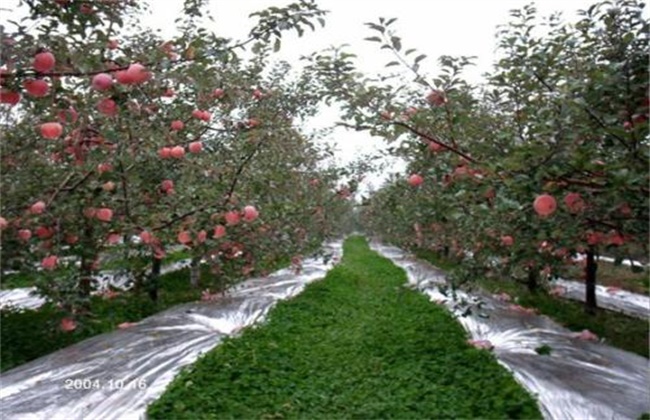
1. Choosing the film and the orchard
At present, there are many manufacturers producing reflective film on the market, and the quality varies greatly. Generally, the good-quality ones are pure double-sided composite films made of polypropylene, polyester aluminum foil, and polyethylene materials. This kind of reflective film has good flexibility, high reflectivity, and strong oxidation resistance, and can be used continuously for more than 5 years. The orchard where it is laid must also have poor permeability; the orchard should not be too closed, and there should be little row-to-row contact. If it is an orchard with poor permeability, a closed canopy, and severe row-to-row contact, even after laying the reflective film, the effect will be relatively poor.
2. Laying the film
When laying the reflective film, it should be higher on the inside and lower on the outside, so that rainwater flows toward the rows, preventing water accumulation on the film surface from affecting the reflective effect. When pressing down the film, soil should not be used, and the film surface should not be stretched too tight, so as to avoid tearing caused by sudden temperature drops and cold shrinkage. Second, the film must be laid strictly. From after the apples are bagged and the fruit begins to color until harvest, the film should be laid tightly both inside and outside the tree disk.
3. Supporting techniques
In order to increase the degree of fruit coloring, laying reflective film should be combined with other management techniques such as fruit bagging, leaf removal and fruit turning, branch bending, and autumn pruning, so as to increase the effect of the reflective film. After removing the bags, remove leaves, and the total amount of leaves removed should not exceed 30%-50% of the total leaf amount of the whole tree; in this way, there is no adverse effect on the tree vigor and yield of the coming year. In order to make the fruit color evenly, it is necessary to turn the well-colored sunny side of the fruit to the shady side, and the poorly colored shady side to the sunny side.
4. Precautions
In orchards with a closed canopy and poor light transmission, as well as densely planted orchards with severe row-to-row contact, the effect of laying reflective film is relatively poor, so such orchards should increase branch thinning to regulate the number of branches. In addition, attention should also be paid to the terrain and row direction. For the reflective effect of the film, sloping land is better than flat land, and north-south row direction is better than east-west row direction. When it is windy and rainy, promptly re-flatten the film lifted by the wind, and clean the soil and fallen leaves on the film to ensure a good reflective effect of the film.
The above is an introduction to the methods and precautions for laying reflective film in apple orchards. We hope it can help you. If you want to learn more related knowledge, please stay tuned to us.