Detailed Explanation of Key Management Points for Apple Trees in the Mid-to-Late Stage
Apples have very high nutritional value, which is why they are so popular with many people. Apple trees are very widely distributed in China, and when growing apple trees, we need to do a good job of management. This is especially true in the mid-to-late stage of apple trees, as management during this period has a great deal to do with apple yield and quality. So how should apple trees be managed in the mid-to-late stage? Below, let's take a look together with the editor at the key management points for apple trees in the mid-to-late stage!
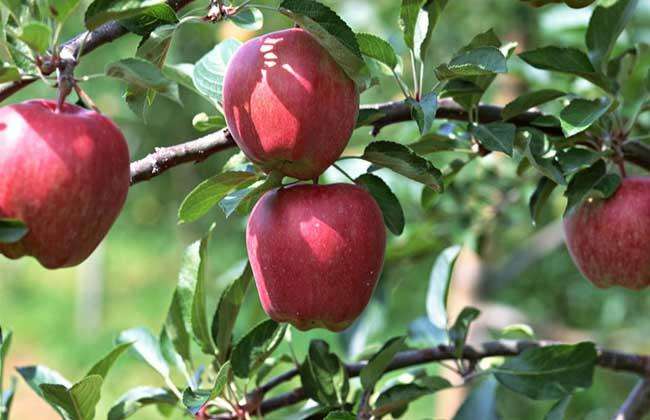
1. Timely Harvesting
In the mid-to-late stage of apple trees, timely harvesting is very important. Timely harvesting is not only key to ensuring the apple fruit, but also has a great deal to do with the storability of the apples. Different varieties have different harvest times; for example, varieties of the Delicious (Yuan Shuai) strain are generally harvested in early September each year. If it is a Golden Delicious (Jin Guan Yi) variety, then it should be done in mid-to-late September. When harvesting, you should start from the lower part first, then work upward. In addition, you should also proceed in order from the outside inward. The main thing is not to damage the fruiting branches, to ensure the integrity of the fruit, and to keep the fruit stalk intact.
2. Soil, Fertilizer and Water Management
In the mid-to-late stage of apple trees, we also need to do a good job of intertillage and soil loosening. Keep the soil permeable and soft, so as to provide a high-quality soil environment for the growth of apple tree roots. Then, after harvesting the mid-season varieties, attention should be paid to applying sufficient base fertilizer. The base fertilizer is generally mainly composed of decomposed organic fertilizer, combined with an appropriate amount of special fertilizer for fruit trees. The amount applied should generally account for about 65% of the annual fertilizer application. When fertilizing, we should also pay attention to the fertilizing method. Usually, the fertilizing methods are mainly ring-shaped trench fertilization and strip-shaped trench fertilization.
Ring-shaped trench fertilization means directly broadcasting it onto the ground around the area outside the apple tree canopy and then watering. Ring-shaped trench fertilization does not require digging trenches, which can save a great deal of manpower. If it is strip-shaped trench fertilization, then the fertilizing trenches need to be dug well, and the effect is very good. In addition, about every half a month we also need to spray a foliar fertilizer once to enhance the photosynthesis of apple tree leaves and delay their leaf fall time. Then we must also control the water supply well, do a good job of drainage and waterlogging prevention, promote apple fruit coloring, and improve quality.
3. Fruit Management
Fruit management is mainly the management work that needs to be done well for late-maturing varieties such as Red Fuji. Various tasks such as bag removal, leaf picking and fruit turning should be done well. When removing bags, first remove all the leaves sticking to the fruit as well as the leaves near the fruit. Then, after about 4 days, remove the other shading leaves. About 10 days after bag removal, when the sunny side of the fruit is fully colored, turn it about 180 degrees to ensure that all parts of the fruit can receive sufficient light and improve the uniformity of fruit coloring. When carrying out work such as leaf picking and fruit turning, it should be done in environments such as cloudy days and overcast skies.
The above is an introduction to the key management points for apple trees in the mid-to-late stage. That is all for today's introduction. This article is for reference only, and I hope it can help everyone!