How to properly fertilize and water jujube trees? Practical tips shared
Jujube trees have extremely important economic value, and their cultivation area is gradually increasing. To improve the yield and quality of jujube trees and increase income, the methods of fertilizing and watering jujube trees are extremely important. Below, the editor brings you methods for watering and fertilizing jujube trees at different stages, hoping to help you.
I. Fertilizing jujube trees
1. Apply base fertilizer early
The jujube tree is a tree species that forms flowers in the same year. From the start of spring sprouting, as the bearing branch grows, flower clusters also appear in its leaf axils. A large amount of nutrients is needed for flower formation, so base fertilizer should be applied early to improve the quality of flower bud differentiation. The base fertilizer is mainly decomposed farmyard manure, mixed with an appropriate amount of nitrogen-phosphorus-potassium compound fertilizer, and applied as early as possible after harvest to meet the needs of spring flower formation, flowering, and fruiting of the jujube tree. If the base fertilizer is not applied in late autumn, it should be supplemented in time after the soil thaws in the following spring. For young trees, fertilization is mainly done by ring trenching, supplemented by radial trenching, and after fertilization, soil should be covered and watered; for trees in full fruit stage, generally about 1000 kg of farmyard manure is applied per tree, with an appropriate amount of compound fertilizer added.
2. Skillfully apply topdressing
Topdressing should be done in time each year before flowering, after flowering, and during the fruit expansion period. Quick-acting nitrogen fertilizer should be applied near the flowering period, with about 1 kg of urea applied per tree in full fruit stage; after flowering, to reduce physiological fruit drop, 1-1.5 kg of nitrogen-phosphorus-potassium compound fertilizer should be applied per tree in full fruit stage; after flowering and during the fruit expansion period, nitrogen-phosphorus-potassium compound fertilizer should be applied separately. At the same time, attention should also be paid to foliar spraying. Generally, in the early stage, a 0.3% urea solution is sprayed once every half month, and in the later stage, a 0.3% potassium dihydrogen phosphate solution is sprayed. Foliar spraying should be done on a clear, windless morning before 10 a.m. or after 4 p.m. If there is dew in the morning, spraying should be done after the dew dries.
II. Watering
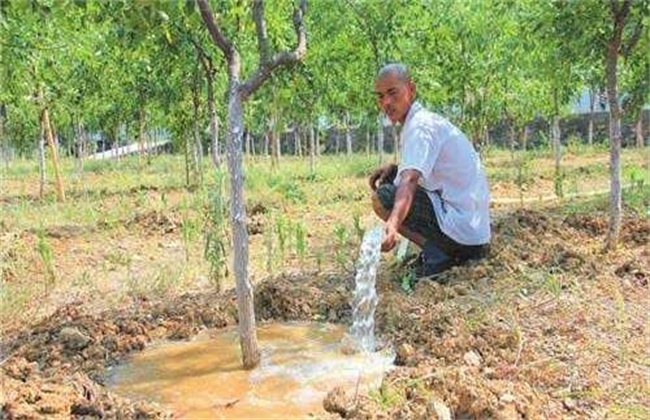
Jujube trees are relatively drought-tolerant. To improve their fruit-setting rate, attention should be paid to timely watering, while also loosening the soil to preserve moisture. In addition to timely watering after each fertilization, a thorough watering is also needed before the jujube tree sprouts to promote sprouting, branch and leaf growth, and flower bud differentiation. Jujube trees need a large amount of water for flowering and fruit setting. If drought occurs during the flowering period, watering must be done. Watering during the flowering period can not only meet the water needs of branch and leaf growth, but also satisfy the fertilization process of pollen germination, improving the fruit-setting rate. When drought occurs during the young fruit stage, the leaves will compete with the young fruit for water, causing the young fruit to drop, so watering should be done in time at this time. In addition, spraying water during the flowering period can increase orchard humidity and promote pollination and fertilization.
The above is an introduction to fertilizing and watering tips for jujube trees, hoping to help you. To learn more related knowledge, please follow us.