Four Key Points for Winter Management of Citrus, Fruit Growers Please Take Note
After harvesting, citrus trees have consumed a large amount of nutrients from bearing fruit, so nutrients need to be replenished in time to restore tree vigor. Winter is also a critical period for flower bud differentiation and for pests and diseases to overwinter. Therefore, winter management affects the citrus harvest in the coming year and forms the basis for reducing pests and diseases. Let's take a look at the key points of citrus winter management below.
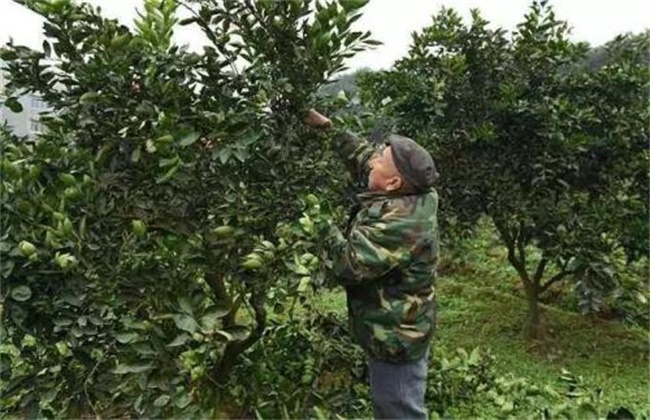
1. Apply base fertilizer early
For flower bud differentiation of citrus, to improve flower bud quality, increase tree nutrients, and improve freezing resistance, base fertilizer must be applied early. For fruit-bearing trees, fertilizer can be applied one week after fruit harvest, and for young trees it must be applied before November. The earlier the fertilizer is applied and the higher the temperature, the faster the fertilizer decomposes, and the more the tree can absorb, so the effect is better. At this time, fertilizer should be mainly organic fertilizer, combined with special fertilizer for fruit trees, applied by the ring trench and strip trench methods.
2. Clean the orchard in time
The pathogens and insect sources that harm citrus overwinter in dead branches, fallen leaves, weeds, and fallen fruit, so in early winter the diseased and insect-damaged branches, dry and withered branches, fallen leaves and fruit, and weeds must be promptly cleared out of the orchard, and burned in a centralized way or buried deeply. At the same time, in late autumn all late autumn shoots should be cut off completely to prevent the late autumn shoots from extending and growing, which would reduce the tree's cold resistance. If the soil has too much moisture, the roots are very prone to rotting, so ditching to drain moisture can be combined with fertilization to avoid trouble in future management.
3. Prevent and control pests and diseases
After cleaning the orchard, starting in late November, spray the leaves with lime sulfur mixture once a month, generally spraying 3-4 times per month. This can effectively prevent and control overwintering anthracnose, mites, scale insects, and other pests, effectively reducing the pest and disease base, lowering the probability of pests and diseases in the coming year, reducing the number of pesticide applications, and improving production efficiency.
4. Strengthen protection against freezing
Freezing damage has a great impact on citrus trees and the yield of the coming year, so freezing protection measures are extremely critical. Methods such as whitewashing the trunk or covering the tree dish with film or rice straw can be used for prevention. Whitewashing the trunk can both prevent freezing and control pests and diseases on the main trunk. It can be made by stirring together 72% water, 22% quicklime, 3% lime sulfur mixture, and 3% table salt. Apply it evenly to the trunk. It is best if after application it does not run downward and does not stick together into clumps. The quicklime must be fully dissolved, otherwise it will absorb water and release heat and burn the trunk. Freezing protection measures must be completed in early December.
The above is an introduction to the four key points of citrus winter management. We hope it can help you. If you want to learn more related knowledge, please follow us.