Key Points and Care Methods for Growing Jabuticaba in the Courtyard
Many people like to grow some fruit trees at home, and jabuticaba (Plinia cauliflora) is a fairly popular one, but as a subtropical-to-tropical fruit, growing a jabuticaba tree in the courtyard is not that simple. If you want to grow it well, keep these key points in mind!
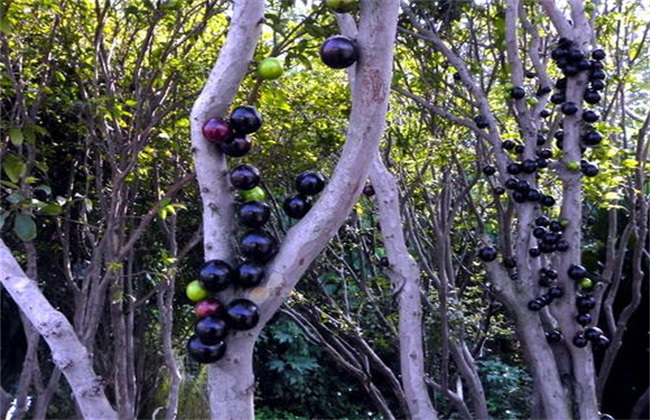
1. Site Selection
If you can grow a jabuticaba tree in the courtyard, the site is usually not too small, so you need to choose a suitable spot. When choosing, give priority to the sunlight factor and pick the spot with the longest sunlight hours, as this is best for the jabuticaba tree's development, because it has a relatively high demand for light. In addition, do not choose a spot with standing water. If it is a somewhat low-lying area, it is best to fill it up higher first; jabuticaba is fairly afraid of standing water, and this spot should ideally have a certain slope to facilitate drainage. That way the site is basically settled.
2. Soil Preparation
Once the planting spot is chosen, you need to start working on the soil, as jabuticaba is fairly picky about soil. The soil in a courtyard is generally rather compacted, and the jabuticaba tree is fairly afraid of this situation; it likes loose, sandy soil, so loosen the soil first, over a larger and deeper area. If the soil is quite clayey, you can appropriately mix in some sand. The soil is best slightly acidic, as this is most suitable for its growth. Finally, let it settle naturally for a period of time to see how the clay content is; if it is still very high, then you need to keep adjusting it.
3. Fertilizer Treatment
Fertilizer is a fairly key part of jabuticaba tree growth. The soil in a courtyard is generally not as fertile as that in an orchard, so fertility mainly relies on fertilizer to make up for it. Here farmyard manure is the main type, but it needs to be treated first before application. If applied directly, farmyard manure will corrode the roots of the jabuticaba tree while it is decomposing, which will seriously affect the tree's growth; generally it is left to decompose for about one to two months. Secondly, organic fertilizer is only added in small amounts at specific growth stages to make up for the demand for certain elements.
4. Overwintering Knowledge
Jabuticaba is a subtropical-to-tropical fruit tree, so its cold resistance is not very strong. Many courtyards in non-tropical areas also grow it, and here you need to take good cold-protection measures. If the winter temperature is below zero or only a few degrees, it is very hard for it to survive. At other temperatures, cold protection can solve the problem. If the winter temperature is 5-8°C, then with cold protection the jabuticaba tree will hardly die. Its everyday cold protection includes coating, covering with film, covering with grass and other methods; just use whichever is more convenient for you.
The above are some key points about growing jabuticaba trees in the courtyard. If you like growing jabuticaba trees, you should learn more about them. It is itself not a particularly difficult fruit tree to grow, and with a proper understanding of some knowledge, there are basically no major problems when planting.