Detailed Explanation of the Timing and Specific Methods of Pinching Jujube Trees
Pinching jujube trees is one of the tasks often carried out during the growing season, and it has an excellent effect on saving nutrients, easing the nutritional conflict between growth and fruiting, and promoting reproductive growth. So when is the best time to pinch jujube trees? How should pinching be done? Follow the editor to learn about it.
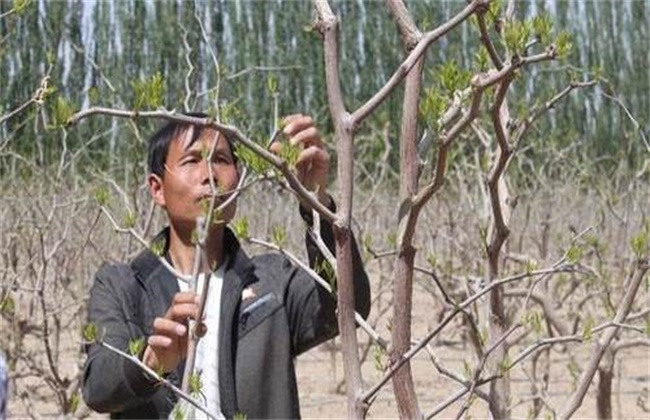
1. Timing of pinching jujube trees
The timing of pinching jujube trees varies with the climate in different regions, and it is generally at the beginning and early stages of flowering. The degree of pinching jujube trees also depends on the growth vigor and growth position of the tree. For jujube trees with relatively strong growth and more space, 5-6 secondary branches can be retained before pinching; for moderately vigorous jujube trees with less space, generally 3-4 heads are retained for pinching; for jujube trees with weaker growth and little space, 1-2 secondary branches can be retained before pinching; and for jujube trees with growing space, regardless of growth vigor, no secondary branches are retained, and pinching can be done after leaving 5-7 cm at the base.
2. Pinching of jujube heads
Pinching of jujube heads can be divided into heavy pinching and light pinching. Heavy pinching is done in early May, when new jujube heads grow to 5—7 cm; for jujube heads with no space that are not retained as extension branches or fruiting branch groups, pinch them after leaving 1-3 cm at the base, and in this period they develop into lignified fruiting branches. Because lignified fruiting branches have a high fruit-setting rate and produce large fruits with high quality, they are the main part of the jujube orchard for growing high-grade fruit. For new jujube heads that sprout after flowering, they should be removed early from the base; for new jujube heads retained as main branch extension branches, pinch them when 3——5 secondary branches appear on them.
3. Pinching of secondary branches
After the new jujube heads retained as extension branches and fruiting branch groups are pinched, the secondary branches on them grow and develop rapidly. At this time, pinching the secondary branches can promote the robust development of the fruiting mother plants and lay the foundation for high yield. For relatively strong-growing secondary branches, pinch them when 5-7 jujube spurs appear; for relatively weak-growing secondary branches, pinch them when 2-4 jujube spurs appear, so that the fruiting branches are close to the main branches.
4. Pinching of fruiting branches
Fruiting branches are numerous, have many growth points, and have a long growth period. Pinching them can reduce the competition for nutrients caused by growth, shifting the focus of nutrient distribution from growth to flower and fruit development. At the same time, pinching fruiting branches can promote larger leaves; large and plump leaves improve photosynthesis, ensure nutrient supply, and pinching of fruiting branches should be done before early flowering at the half-grown leaf stage. Generally, ordinary fruiting branches retain 10-12 leaves, and lignified fruiting branches retain 18-20 leaves for leaf retention.
The above is an introduction to the timing and methods of pinching jujube trees. We hope it can help you. To learn more related knowledge, please stay tuned to us.