What Causes Empty Vines in Watermelon? A Full Breakdown of Prevention Methods
During watermelon cultivation, empty vines that fail to set fruit often appear. Many growers mistakenly blame the variety for poor fruit set, but in fact the variety has very little to do with it. So what causes empty vines in watermelon? Let's take a look together.
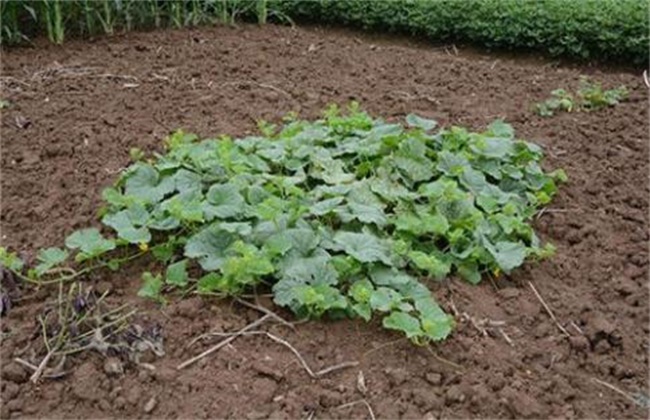
1. Adverse climate
Watermelon is a warm-loving crop, with an optimum growing temperature of 15-33 degrees. Below 15 degrees or above 40 degrees, growth is inhibited, causing poor development of female flowers and ovaries, which leads to fruit drop and fruit abortion, and in turn causes watermelon "empty vines." For example, low temperatures at flowering, high temperature and drought at flowering, rainy weather at flowering, and strong direct sunlight can all produce empty vines.
Prevention methods: For empty vines caused by various adverse climates, targeted preventive measures are needed. For low temperatures at flowering, artificial pollination can be used to manually promote fruit set; for high temperature and drought, phosphorus fertilizer solution can be poured at the roots or heavy irrigation used to change the air and soil humidity and promote pollen development and fertilization; for rainy weather at flowering, rain protection measures can be taken in advance according to weather forecasts, such as putting rain-proof paper caps on female flowers, or collecting opened male flowers in advance and carrying out artificial pollination after the rain; and for strong direct sunlight, weeds and the stems and vines cut off during pruning can be used to cover young melons to prevent sunscald.
2. Improper cultivation techniques
Improper sowing can cause empty vines. The later the sowing time, the higher the node at which female flowers are borne, and insufficient supply of nutrients and water causes flower drop or fruit abortion and thus empty vines. If sowing density is too high, the peak vegetative growth period coincides with the hot, rainy season; at this time the plants are crowded in the field, permeability is poor, and insufficient light produces empty vines.
Prevention methods: Sowing should be done at the right time, with early seedling raising and early cultivation, aiming to cultivate strong seedlings, stagger the high-temperature period of flower bud differentiation, lower the node at which female flowers are borne, and prevent empty vines. The cultivation density of watermelon should be determined according to the variety and soil fertility, so as to avoid too low a density causing plants to be crowded; generally, mid-to-late maturing varieties are planted at 600-800 plants per mu, while extra-large watermelons are planted at 350-400 plants per mu, and early-maturing small-fruited types at 1000-1300 plants per mu.
3. Improper cultivation management
Improper management at the seedling stage can cause weak seedling growth and lead to empty vines; if field management cannot keep up in the early vine-extension stage, vegetative growth becomes excessive, light penetration and ventilation between plants decrease, causing flower and fruit drop and thus empty vines; unreasonable pruning and vine pressing means vegetative growth cannot normally shift to reproductive growth, affecting fruit set rate and causing empty vines. Improper fertilizer and water management, with an unreasonable ratio of nitrogen, phosphorus, potassium and trace elements. Insufficient nutrient supply or uncoordinated nutrients causes excessive vegetative growth and previously empty vines.
Prevention methods: At the seedling stage, cultivating, fertilizing and strengthening seedlings can promote flower bud differentiation; during vine extension, pruning and vine pressing can inhibit vegetative growth, coordinate the contradiction between vegetative growth and reproductive growth, and improve fruit set rate; fertilizer and water management should be strengthened, with a reasonable formula fertilization, to prevent excessive nitrogen fertilizer and the occurrence of runaway vines and spreading vines.
The above is an introduction to the causes of empty vines in watermelon and prevention methods. We hope it helps you. To learn more related knowledge, please keep following us.