What symptoms appear when grapes are deficient in calcium
Grapes are grown in every part of our country, and when growing grapes, fertilization work is very important. In addition to basic fertilizers such as nitrogen, phosphorus and potassium, nutrients such as calcium must also be supplemented in time. Calcium plays a very large role in the growth of grapes, and if grapes lack calcium during growth, then calcium deficiency disease is likely to occur. So what are the symptoms of calcium deficiency in grapes? Below, the editor will give you a brief introduction, let us take a look together!
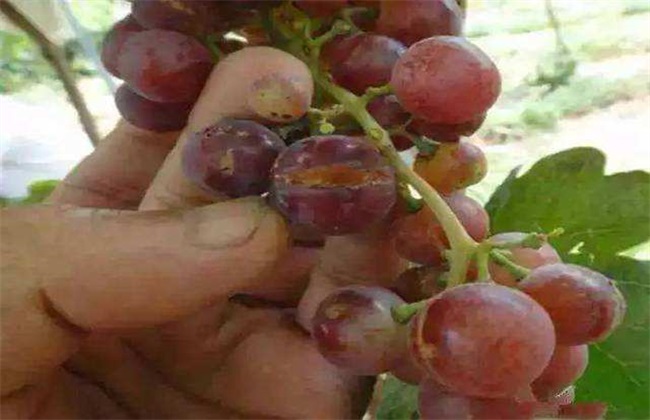
1. Symptom presentation
During the growth of grapes, if they lack calcium, then the leaves will show the phenomenon of downward curling. Many spots will appear on the young leaves, and the spots will gradually lose their green color, finally becoming dark brown, and then becoming dead spots. If the calcium deficiency is severe, then the growing points of the new shoots of the grape will gradually die, causing the grape to develop a large number of diseases such as fruit cracking and fruit shrinkage, reducing fruit firmness and storability. At the same time, calcium is also an important component of the cell wall. After calcium deficiency, the grape fruit skin will be thin, and when encountering a high-temperature and strong-light environment, sunburned fruit is likely to occur, and after maturity, when encountering the rainy season, the fruit is also prone to cracking, reducing grape yield and quality.
2. Causes of calcium deficiency
Insufficient calcium content in the soil is one of the main causes of calcium deficiency in grapes. This is because the calcium content of the soil itself is not very high, especially in some igneous rocks, siliceous sandstone, or saline-alkali soils with high exchangeable sodium. However, under normal circumstances, grapes are not grown in this kind of soil. The main reason is still severe soil acidification, which leads to insufficient organic matter content in the soil, thereby reducing the content of calcium elements such as exchangeable calcium and solution calcium in the soil, causing calcium deficiency disease in grapes.
Another reason is soil salinization. If the soil is salinized, although the exchangeable calcium element in the soil is relatively sufficient, it is generally difficult for it to enter the soil solution and move to the grape roots, and if there is long-term drought and strong evaporation, it will further inhibit the absorption of calcium elements, causing calcium deficiency in grapes. Finally, if the grape roots are damaged or when fertilizing, if fertilizers such as phosphorus and potassium fertilizers are applied excessively, they will affect the calcium absorption of grapes, thereby causing calcium deficiency disease in grapes.
3. Solutions
We mainly still need to focus on prevention. First, when fertilizing, we should pay attention to the proportion of calcium elements and supplement calcium for the soil. Then appropriately improve the soil structure and reasonably increase the application amount of organic fertilizer. Also control the amount of major elements such as nitrogen, phosphorus and potassium well, and maintain a good ratio. Then, during the grape leaf expansion period, we can supplement calcium elements for the grapevines by spraying foliar fertilizer, ensuring the normal growth of grapes.
The above is a brief introduction to what the symptoms of calcium deficiency in grapes are. That is all for today's introduction. This article is for reference only, and I hope it can help everyone!