Detailed Explanation of Key Techniques for Spring Management of Walnut
Spring is the period of flower bud differentiation in walnut. Management before walnut budbreak is one of the most important steps of the year for walnut. Doing this step well is one of the effective measures to ensure walnut budbreak, flowering and fruiting, and a high yield. So how should walnut be managed in spring? Follow the editor to learn about it.
1. Soil, fertilizer and water management
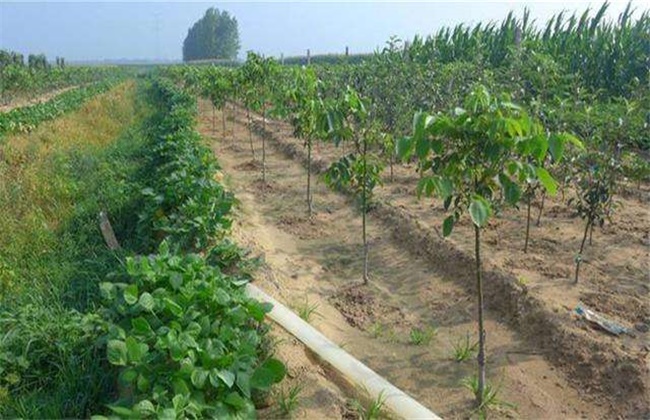
First is soil. Soil is the foundation for walnut growth. Strengthening soil management can be carried out by combining orchard clean cultivation, orchard grass growing, and orchard intercropping. Next is fertilization. For young trees under 3 years old, the ring-shaped trenching method is generally used, digging pits 30 cm from the trunk to apply fertilizer, while for mature trees it is best to use concentrated fertilization mainly by digging pit-shaped holes, digging four pits in the vertical direction of the canopy. The amount of fertilizer should also be controlled. Generally, each young tree is given 5-15 kg of farmyard manure and 0.3-0.6 kg of urea; while for 3-5 year old fruiting trees, each tree can be given 30-50 kg of farmyard manure and 0.5-1 kg of urea. The application amount of chemical fertilizer should increase with tree age. In March to April, before walnut budbreak, when there is insufficient rain and the climate is dry, water once with budbreak water to promote new branch growth. After transplanting, also pay attention to watering to improve the survival rate.
2. Pruning
Spring pruning is generally carried out 20-30 days before budbreak. At this time, combined with pruning, scions are collected and stored short-term. From the end of March to the end of April, branch grafting is used for top grafting to replace superior cultivars or to propagate grafted walnut seedlings. For trees beginning to bear fruit, bending branches can balance the branch vigor of the main branches and fruiting branch groups and promote flower bud formation; for full-bearing trees, adjusting the angle and direction of branches can significantly improve ventilation and light penetration, promote the formation of medium and short branches, reduce bareness at the lower part of branches, and increase effective fruiting positions; for young trees, promote canopy formation so they bear fruit as early as possible.
3. Pest and disease prevention and control
In spring, the main diseases to prevent are walnut black spot disease, canker disease, and rot disease. Lime sulfur mixture can be sprayed before budbreak. When the temperature rises above 18 degrees, spray the whole orchard plants and ground once with 3-5 degrees Baume lime sulfur mixture, and then spray once more with 0.3-0.5 degrees Baume lime sulfur mixture after budbreak during the leaf expansion stage. In orchards with severe black spot disease, spray once more with 0.3-0.5 degrees Baume lime sulfur mixture after 7-10 days, which can effectively prevent and control black spot disease. For the control of canker disease and rot disease, scrape the diseased spots down to the xylem, then apply control agents.
4. Frost prevention
Spring temperatures are unstable. In many areas, a late spring cold spell occurs in late spring, causing relatively severe frost damage to walnut and dampening the enthusiasm of some fruit growers, so frost prevention should also be done well. First, choose frost-resistant cultivars. These cultivars break bud about 1 week later than other cultivars, which can effectively avoid frost. In addition, pay attention to weather forecasts in a timely manner. When the nighttime temperature drops to 0-2 degrees, smoke should be carefully used in the orchard for defense. Smoke-producing materials can be crop straw, weeds, fallen leaves, corn cobs, and other flammable materials that can produce a large amount of smoke. Pits can be dug on site, grass piled in the pits, and a layer of wet grass or wet soil placed outside, so the smoke volume is sufficient and the duration is long.
The above is an introduction to spring management techniques for walnut. I hope it can help you. To learn more related knowledge, please follow us.