How to solve the outward shift of the fruiting position in chestnut
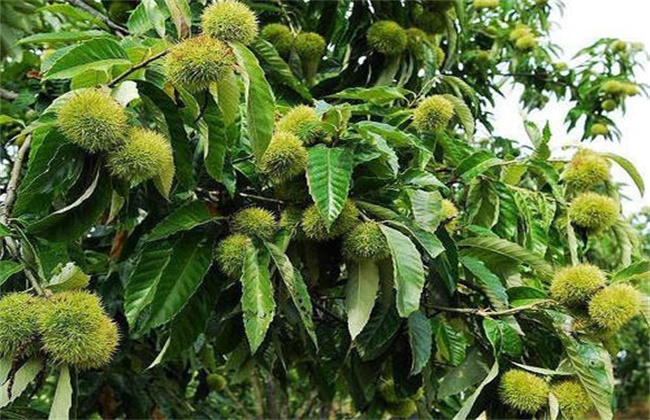
Chestnut has the habit of bearing fruit on strong shoots, and strong shoots generally grow on the outer part of the canopy, so fruit is borne on the periphery; young trees have very few fruiting shoots and low yields. As adult trees produce more branches, the branches become thinner and thinner, and eventually lose the ability to bear fruit. So what should be done about the outward shift of the fruiting position in chestnut? Follow the editor and take a look.
1. Pruning of fruiting shoots
Based on the characteristic that chestnut bears fruit on strong shoots and the positional patterns of strong shoots, attention should be paid to rational pruning of fruiting shoots and outer branches; only in this way can chestnut yields be increased. Strengthening the pruning of chestnut can also effectively [address] the outward shift of the fruiting position. Drawing on cultivation experience from many places, focus on renewal pruning of branches, strengthen protection of the mother branches, and effectively cultivate new fruiting shoot groups so that the mother branches become more robust. To improve the uniformity of the fruiting position, the branch-bending method can be used to cultivate new shoots, giving chestnut the efficiency of three-dimensional fruiting, thereby controlling the outward shift of the fruiting position.
2. Bud removal
Bud removal is also an important measure that can effectively [address] the outward shift of the fruiting position in chestnut. To improve bud plumpness, the method of removing small buds and keeping large buds should be used. By pruning young buds, the young buds maintain good spacing density, achieving the phenomenon of more on the outside and fewer on the inside, concentrating the young buds on strong shoots, which is conducive to chestnut flowering and fruiting and improves fruiting uniformity. Male flowers of chestnut are several times more numerous than female flowers, and to effectively reduce the consumption of nutrients by flowers, male flowers should be removed as they grow, maintaining a reasonable inflorescence so as to achieve the effect of male flowers above and female flowers below, thereby ensuring uniform pollination during the flowering period.
3. Pinching before fruiting
Pinching before fruiting is also one of the important measures to ensure reasonable growth of chestnut. It mainly means keeping only about 4 leaves before fruiting and removing the flower center at the same time; this can significantly increase the fruit-setting rate and reduce empty burrs. Improving scientific pinching operations and giving play to the advantages of the chestnut tree species achieves the effect of improving the quality and yield of chestnut.
3. Burr thinning
Burr thinning is also an important measure in chestnut cultivation. Too many chestnut burrs usually affects the overall development of the chestnut tree. Only by paying attention to using scientific burr-thinning methods will the growth of the chestnut tree not be affected.
The above is an introduction to what to do about the outward shift of the fruiting position in chestnut. I hope it can help you. To learn more related knowledge, please stay tuned to us.