How to manage chestnut trees during the full fruiting period? Key technical points explained in detail
The full fruiting period of chestnut trees is relatively long; with proper management, they can maintain high yields for decades. However, for chestnut trees in the full fruiting period, the quality of management not only affects the yield of the current year and the next year, but also affects the number of years they continue to bear fruit. So how should chestnut trees be managed during the full fruiting period? Let's take a look together with the editor.
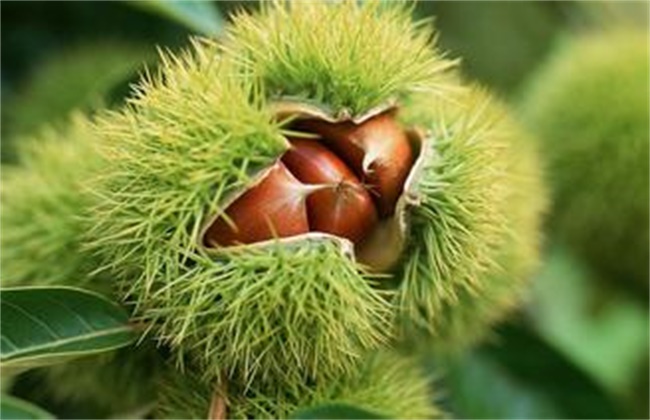
1. Fertilizer management
Chestnut trees have relatively strong adaptability, so they are generally planted on plots with not very high fertility, such as barren slopes. If you want them to produce high yields year after year, fertilizer must keep up, otherwise the phenomenon of alternate bearing is very likely to occur, severely reducing their fruiting life. Generally, in March to April, an appropriate amount of fertilizer should be applied, especially some phosphorus and potassium fertilizer, to ensure branch and shoot growth and flower bud differentiation. Secondly, in mid-July, it is recommended to apply some green manure; on one hand, it can improve the soil, and on the other hand, it can help produce long-term effects. During the fruiting period, the expansion of young fruit requires a large amount of nutrients. Applying supplemental fertilizer at this time can make chestnuts grow larger and mature earlier. The last application is winter fertilizer, applied before winter begins, to ensure the plants overwinter safely, and high-quality farmyard manure is preferable.
2. Tree shape management
It is best to prune chestnut trees in both winter and summer. If pruning is done in only one of these seasons, the effect is not very good, and it is not easy to prune thoroughly. Generally, summer pruning is done at the end of June, and in some areas it can be postponed to early July; the timing for winter pruning is more flexible, and can run from November all the way to early March of the following year. During pruning, attention should be paid to tree shape control, and the fruiting branches should be distributed as evenly as possible. Especially for chestnut trees that have borne fruit for many years, it is necessary to prevent the fruiting area from moving outward, and during pruning, more inward pruning should be done to maintain yield. In addition, old branches and diseased branches on old trees should be removed, which helps prevent disease and improve tree vigor.
3. Flower and fruit period management
After entering the flowering period, for orchards where pollination is not very good, artificial intervention such as hand pollination is needed, which can ensure the fruit set rate. After fruit set, thinning can be done appropriately to maintain a balanced load on the tree. If too much fruit is set manually, greatly exceeding the tree's carrying capacity, the fruits will compete with each other for nutrients, causing the fruit to be generally smaller, which is not conducive to selling. Therefore, appropriately thinning fruit on branches with too much fruit is conducive to achieving high-quality production.
4. Disease prevention
Chestnut trees are relatively prone to infection by diseases, especially with many insect pests, which will reduce chestnut yield and can also cause wormholes in chestnuts, severely affecting fruit quality. To avoid the impact of this phenomenon, it is recommended that farmers can use targeted pesticide development, especially in years when pests and diseases are relatively severe, and should pay attention in advance.
The above is an introduction to the key management points for chestnut trees during the full fruiting period. We hope it can help you. If you want to learn more related knowledge, please stay tuned to us.