How to handle kiwifruit bleeding? It is important to master the correct method
Kiwifruit has a very large planting area in China, and when growing kiwifruit, many problems often arise. Among them, bleeding is one of them, and bleeding is very unfavorable to the growth of kiwifruit. It seriously affects the yield and fruit quality of kiwifruit, thereby reducing economic benefits. So what harm does kiwifruit bleeding cause? And how should it be handled? Below, the editor will give you a brief introduction. Let's take a look together!
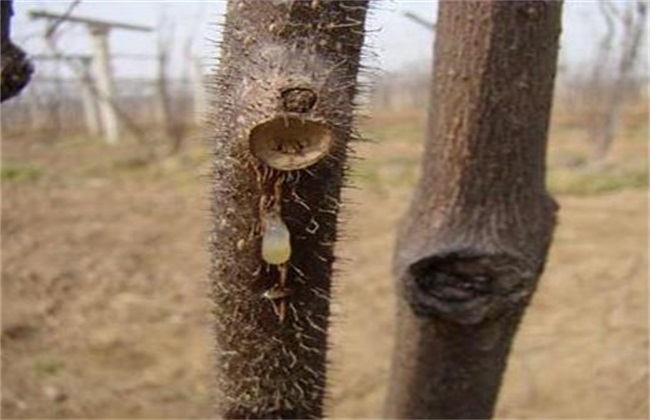
1. Harm of bleeding
During the growth of kiwifruit, the bleeding period is actually one of its growth stages, and it is generally a normal phenomenon. However, this only refers to when the bleeding is relatively minor; if the bleeding is minor, then the harm to the kiwifruit tree is very small. But if the bleeding is relatively severe, then it is very unfavorable to the growth of the kiwifruit tree. It will not only reduce the number of flowers and fruits and lower fruit quality, but also cause the vigor of the kiwifruit tree to decline. According to surveys, severe bleeding generally occurs in vigorously growing trees, while trees with weaker vigor generally do not have bleeding. Therefore, we can judge the tree's growth vigor based on bleeding.
2. Causes of bleeding
When growing kiwifruit, if the temperature continues to rise, then the inside of the kiwifruit tree will begin to become active. The roots gradually transport water to the upper part of the fruit tree, and when transporting water, because wounds were left during winter pruning the previous year, part of the water will flow out from the wounds, thus forming bleeding. The bleeding period can actually be regarded as a phenological period in the growth of kiwifruit, and it is basically a normal phenomenon. But if the bleeding is too severe, then it is very unfavorable to tree vigor, so everyone should pay more attention.
3. Preventive measures
If you want to reduce the bleeding phenomenon of kiwifruit, then prevention should be the main approach. First, we must do a good job of winter pruning. Winter pruning can be carried out from about ten days after the kiwifruit tree sheds its leaves until February of the following year, and pruning must stop after entering March. During winter pruning, if large branches are pruned, then after pruning the wounds should be allowed to dry as soon as possible. Then apply an appropriate amount of sealing glue to the wounds to reduce bleeding and avoid excessive bleeding.
After spring arrives, observe the growth of the kiwifruit tree frequently. If bleeding is found at pruning cuts, then sterilize in time and apply an appropriate amount of healing agent to promote the wounds to heal as soon as possible. Then, according to the soil moisture condition, do a good job of watering, and it is best to delay watering time to reduce bleeding. But if the bleeding is too little, then it may be that the kiwifruit tree roots are distributed too deep, or that it has root rot, etc. Therefore, corresponding measures should be taken in time to restore tree vigor and enhance root growth capacity. Finally, after clearing the orchard every winter, whitewash the trunk to avoid frost damage to the trunk and reduce pathogen infection.
The above is a brief introduction to how to handle kiwifruit bleeding. That is all for today's introduction. This article is for reference only, and I hope it can help everyone!