What are the methods for growing papaya seedlings? Common techniques explained clearly at once
Papaya has high medicinal value and also excellent edible and medicinal value, and many regions cultivate it as a courtyard ornamental plant, with good economic returns. As more and more people grow it, how are papaya seedlings raised? Let's take a look together.
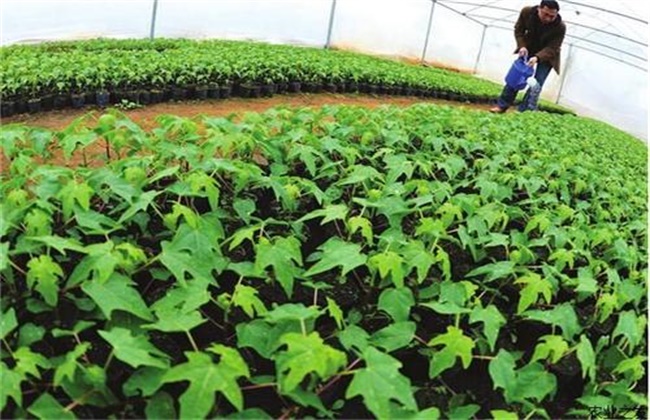
1. Seedling cultivation from seed
First, select fully mature fruit from a robust mother plant, take out the seeds, wash them clean, dry them in the shade, put them into a well-ventilated bag, and store them in a low-temperature, dry environment. For autumn sowing, the cleaned seeds can be directly sown in shallow furrows in rows; for spring sowing, sand stratification treatment is required. After sowing, the soil covering should not be too thick; three times the seed diameter is appropriate, as too thick a cover may cause the seeds to emerge slowly or even fail to emerge. After sowing, water to keep the soil moist. When the seedlings grow to 3 true leaves, thin them out; when they grow to 6 true leaves, increase fertilizer and water management, combining foliar fertilizer spraying and ground watering with fertilizer. In addition, the new bud seedling transplanting technique promoted in recent years is generally welcomed. First raise the seedlings in a seedling bed, and when the seedlings grow to 3 leaves, transplant them to the field. This seedling-raising method produces uniform emergence, well-developed lateral roots, and a high seedling survival rate.
2. Cultivation of grafted seedlings
The scions for grafted seedlings should be collected from 1-year-old branches on plants of excellent varieties that are fully developed and free of pests and diseases. Scions used for spring grafting should be taken during the winter dormant period, and after collection buried in wet sand for storage; scions used in summer do not have so many problems and can be used immediately after collection, with the leaves removed, the petioles retained, and wrapped in a damp cloth. Spring grafting should be carried out 20 days before the rootstock sprouts, and methods such as tongue grafting and cleft grafting can be used; in summer and autumn, T-shaped budding or chip budding with wood can be used, and the rootstock plant height should be above 50 cm. After grafting, frequently check the survival rate, and promptly re-graft any that have not survived. When the new shoots grow to 30 cm, untie the binding, and at the same time strengthen fertilizer and water management, control weeds and pests, and they can leave the nursery the same year.
3. Cutting propagation
Somewhat similar to grafting, the branches used for cuttings should be selected from excellent mother plants, with well-developed tissue and plump leaf buds, 1-2 year old branches, cut into 15-25 cm lengths, retaining 2-3 nodes, with the upper end cut flat 1 cm from the terminal bud, and the lower end cut into a slanted surface near the axillary bud, kept moist for storage until use. Green branch cuttings can be collected during the growing season, taking semi-lignified branches, cutting them into 15-20 cm, and removing the lower leaves. Cuttings should be done when the ground temperature reaches above 15 degrees. In summer, this is generally done from June to August, when appropriate shading and moisture retention are needed. Treating the cuttings with a rooting agent before cutting can significantly increase the survival rate.
The above is an introduction to what methods there are for growing papaya seedlings. We hope it helps you. To learn more related knowledge, please follow us.