Detailed Explanation of the Causes and Control Measures of Replant Disease in Orchards
In orchard cultivation, pest and disease control is one of the most critical aspects, and a common disease in orchards is replant disease. It refers to the phenomenon where, on the same plot of land, fruit trees of the same species are continuously planted after the previous planting, causing the growth of replanted fruit trees to be inhibited or pests and diseases to recur. So how should replant disease in orchards be controlled? Let's take a look together with the editor.
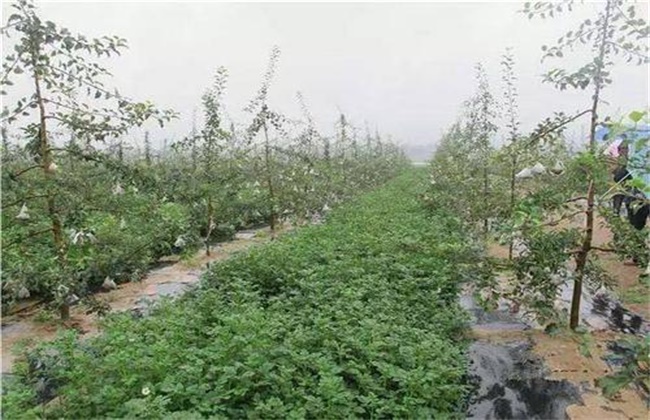
I. Symptoms of the Disease
Replant disease mainly manifests as weak growth of transplanted young trees, poor root development and root rot, slow growth of new shoots, shortened internodes, leaf chlorosis, difficulty in sprouting branches, and poor fruit quality. The replanted trees become stunted "little old trees," and in severe cases, they gradually wither and die before reaching maturity, causing the orchard to decline prematurely and resulting in serious economic losses.
II. Causes of Occurrence
There are many reasons for the occurrence of replant disease in replanted orchards. First, the root system of old trees secretes toxic substances that inhibit the respiration of newly planted fruit tree roots, causing disease and death of the newly planted trees. Second, there are relatively many nematodes and pathogenic microorganisms in the orchard soil, which cause significant damage to the root system of newly planted fruit trees, resulting in weak growth and poor development of the newly planted trees. Third, the orchard lacks certain nutrient elements or has excess nutrients, causing nutrient imbalance that leads to slow plant growth.
III. Control Measures
1. Renewal and Crop Rotation
When renovating an orchard, it is essential to insist on rotation rather than continuous cropping. For example, if the previous crop was apple trees, then grapes, citrus, apricots, walnuts, persimmons, and other fruit trees can be directly planted; however, if the previous crop was pear trees, then it is not suitable to plant stone fruit trees such as peaches, plums, apricots, and cherries, and pome fruit trees should be planted instead.
2. Clearing the Orchard and Improving the Soil
After old trees are dug out or nursery stock is removed, the orchard should be thoroughly cleared, and residual roots, fallen leaves, and weeds around the orchard should be collected and burned. When planting fruit trees in the same location, the soil should be deeply plowed and improved, residual roots removed, and the original fruit tree planting holes should be avoided by digging new holes elsewhere for planting. After digging the holes, they can be disinfected and then covered with plastic film, which can kill the vast majority of nematode pathogens and microorganisms remaining in the soil. For acidic soil, lime can be spread to improve it.
3. Increasing Organic Fertilizer Application
Apply 100-150 kg of decomposed organic fertilizer into newly dug planting holes. While avoiding excessive nitrogen fertilizer, increase the application of phosphorus and potassium fertilizers. During the growing season, spray amino acid compound micro-fertilizer at a concentration of 300 times every 15-20 days.
4. Disinfection and Sterilization of Nursery Stock
Before planting, use 3-5 degrees Baume lime sulfur mixture, or 800 times dilution of Tuzet, or 1000 times dilution of carbendazim to spray or soak the seedlings for 10-20 minutes, then rinse the roots with clean water. This can kill the pathogens carried on the roots.
5. Supplementing Nutrients
Before replanting, it is best to conduct soil sampling and analysis to understand the deficiency or accumulation of nutrient elements in the orchard soil, and then determine the fertilization plan. Based on the type and variety of newly planted fruit trees, reasonably supplement and adjust the nutrient elements in the soil, with particular emphasis on the application of trace elements and organic fertilizers, to ensure the needs of fruit tree growth.
The above is an introduction to the causes and control measures of replant disease in orchards. We hope it can help you. For more related knowledge, please stay tuned to us.