How to prevent and control alternate bearing in kiwifruit? Detailed practical measures
Kiwifruit is what we commonly call qiyiguo in daily life. It is rich in vitamins and is very popular with many people. At present, the planting area of kiwifruit in our country is still very large, but when we grow kiwifruit, alternate bearing is prone to occur, which is very unfavorable to kiwifruit yield. So how should alternate bearing in kiwifruit be prevented and controlled? Below, the editor brings you the prevention and control measures for kiwifruit. Let's take a look!
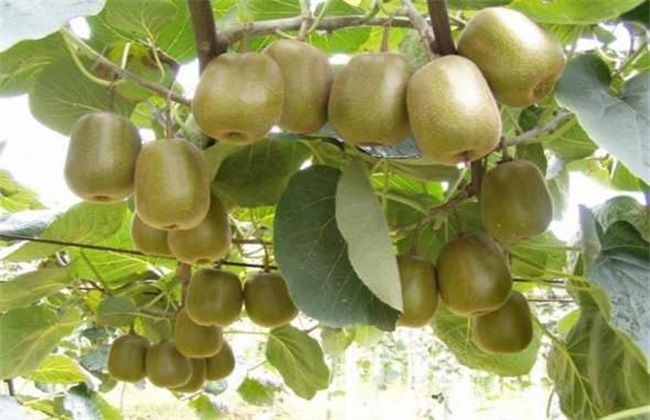
1. Reasonable load
The alternate bearing phenomenon in kiwifruit may be caused by the kiwifruit trees exceeding their load. If the yield per mu of kiwifruit is around 2000 kg, then as long as a robust tree vigor is maintained, the commercial fruit rate of kiwifruit trees can reach more than 90%. However, if there are few supporting production measures of various kinds, then alternate bearing may occur. Therefore, the number of fruits retained per mu should be controlled between 10000-18000, and the number of branches retained per plant should be maintained at about 15 long fruit-bearing branches. The tree vigor of kiwifruit trees should be maintained to ensure stable production.
2. Fertilizer and water management
When applying fertilizer, we should carry out soil testing and fertilizer formulation work. Understand clearly the demand for various nutrients at each yield level per mu, and after determining the absorption amount, control the fertilizer application amount well. For example, producing about 100 kg of fresh fruit requires approximately 0.08:0.25:0.05 kg of nitrogen, phosphorus, and potassium. In addition, an appropriate amount of medium and trace elements and organic matter is also needed. During the kiwifruit growing period, we generally need to apply topdressing about four times, including fruit harvesting fertilizer, bud-promoting fertilizer, and fruit-swelling fertilizer, etc. During topdressing, it can be applied by flushing with water, and the watering amount should be controlled well to keep the soil moist but without water accumulation, so as to avoid root rot.
3. Amount of flowers and fruits retained
We should also control the amount of flowers and fruits retained on the fruit trees. For kiwifruit in an on-year, about 5 fruits are retained on robust long fruit-bearing branches, 3 on medium fruit-bearing branches, and about 2 on short fruit-bearing branches. If it is a clustered vigorous branch, then no fruit may be retained. For umbrella-shaped flowers and fruiting, only the middle fruit is retained, and the fruits on both sides are removed. In addition, mummified fruits, deformed fruits, etc. should also be removed. Among them, the leaf-to-fruit ratio of the fruit trees should be maintained at about 7:1. Trees in an off-year should retain even fewer fruits: three on long fruit-bearing branches, 1-2 on medium fruit-bearing branches, and as few as possible on short fruit-bearing branches.
4. Proper pruning
For fruit trees with dense crowns and poor permeability, overly dense and twin branches should be removed in time. Generally, one fruiting mother branch should be retained about every 20 cm, and branches such as thin and weak branches, pest- and disease-damaged branches, and clustered branches should be heavily removed from the base. Then, after fruiting in the current year, the fruiting branch groups should be renewed, exchanged, and pruned. If excessive nitrogen fertilizer application causes excessive vegetative growth of branches and leaves, then ring-barking should be carried out on the main vines. After ring-barking, fungicides should be sprayed for sterilization to avoid excessive vigorous growth, accumulate tree nutrients, and promote flower bud formation.
The above is a brief introduction to the measures for preventing and controlling alternate bearing in kiwifruit. That is all for today's introduction. This article is for reference only, and I hope it can be helpful to everyone!