What symptoms appear when a peach tree lacks potassium?
The planting area of peach trees in our country is very large. When planting peach trees, fertilization work is very important; our fertilization must ensure sufficient and comprehensive nutrition. No nutrient can be missing, especially potassium, which is very important for the growth of peach trees. If a peach tree lacks potassium, then it is very unfavorable for the growth of the peach tree. So what symptoms does potassium deficiency in peach trees have? Let's take a look together with the editor below!
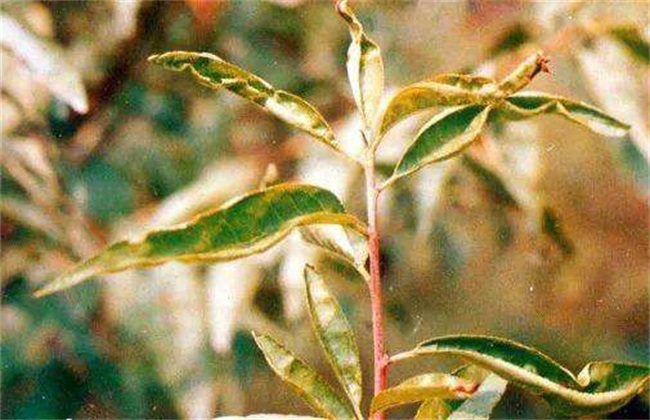
1. Symptoms of potassium deficiency
Potassium deficiency in peach trees will show symptoms on every part of the tree. New shoots sprouting on the branches will be thin and long, and if the leaves are affected, then it will spread from the leaves in the middle of the new shoots to the base and top of the plant. The old leaves show symptoms first; in the early stage of potassium deficiency, the leaf margins gradually wither and scorch, but the mesophyll tissue is not affected. The main leaf veins shrink and the leaves curl, and finally brown patches appear around the leaf margins, and the patch areas gradually necrose; if you look at the back, the color is generally mainly red, but the leaves generally do not fall off.
It also affects the peach blossoms, especially the flower buds; with potassium deficiency the number of flower buds will decrease, thereby reducing the flowering rate. If the fruit lacks potassium, the fruit is thin and small, poorly colored, and has a bland, somewhat sour taste, with extremely low commercial value. Moreover, the top of the fruit is also prone to a rotten appearance, and physiological fruit drop is likely to occur. For the whole peach tree, potassium deficiency will significantly reduce the growth vigor of the peach tree, causing a decline in stress resistance and making it prone to various diseases. In severe cases, it will cause the whole peach tree to wilt.
2. Conditions for occurrence
When planting peach trees, if the soil is fine sandy soil, acidic soil, or soil with little organic matter, then potassium deficiency is likely to occur. And if too much lime is applied, then the availability of potassium will also be reduced. In addition, if nitrogen fertilizer is applied in soil where potassium deficiency is not very serious, potassium deficiency is more likely to be expressed. If fruit trees lack potassium, they are prone to cold damage, but after applying potassium fertilizer they are prone to magnesium deficiency, and if there is too much potassium fertilizer, they are also prone to boron deficiency. If the amount of fruit hanging on the tree is too large, the potassium content in the leaves will decrease, and potassium deficiency is likely to occur.
3. Prevention and control measures
The roots of peach trees are not distributed very deeply, so respiration is relatively strong; therefore we should properly deep-plow and improve the soil to increase soil air permeability. And in combination with deep plowing, sufficient organic fertilizer should also be applied in autumn, with the amount per tree kept at about 45kg. Then in spring when the peach tree buds break, in combination with watering work, apply an appropriate amount of plant ash per tree. Then at important periods such as the flowering stage, leaf expansion stage, and fruit swelling stage of the peach tree, appropriately spray plant ash or monopotassium phosphate, etc., to supplement potassium for the peach tree and meet the peach tree's demand for potassium. At the same time, we must also do a good job in pruning, properly retain more bare branches, and thin and cut back branches such as overly dense branches and flower-bud-like branches to rejuvenate the tree vigor.
The above is a brief introduction to what symptoms potassium deficiency in peach trees has. That is all for today's introduction. This article is for reference only, and I hope it can be helpful to everyone!