What are the key technical points for autumn management of pear trees?
Pears are a fruit that many people enjoy eating, and they are grown over a very large area in our country. When growing pear trees, we need to carry out management work well according to the changes of the seasons. Because the climate changes greatly in each season, the growth of pear trees is also affected to a greater or lesser extent. So how should pear trees be managed in autumn? Below, the editor will give you a brief introduction. Let's take a look together!
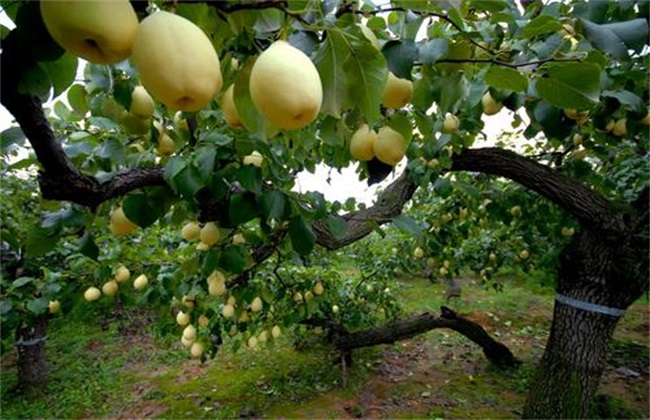
1. Applying base fertilizer in autumn
In autumn, the first management task we need to do well is applying base fertilizer. Base fertilizer should generally be applied in August-September, in which nitrogen fertilizer must not be excessive, and the proportion of potassium fertilizer should be appropriately increased. When applying base fertilizer, it should be combined with deep plowing and hole expansion. It is mainly based on decomposed farmyard manure, with the amount per pear tree kept at about 60-80 kg, combined with an appropriate amount of compound fertilizer, and watered and covered with soil after application. Then we should also prune the roots to cut them, and the depth of the fertilizer ditch should be about 10 cm deeper than before, to ensure balanced growth of the pear tree.
2. Branch bending and branch hanging
When managing pear trees in autumn, we should also do well in branch bending and branch hanging. Branch bending can allow young trees to form their crowns earlier, let pear trees sprout shoots earlier and increase the number of shoots, and prevent excessive vegetative growth of pear trees. It should generally be carried out after the pear trees shed their leaves in autumn. For 2-3 year old pear trees, the branches to be bent should mainly be the main branches, extension branches, and secondary main branches. The main targets for branch hanging are drooping branches, because if drooping branches bear too much fruit, they are prone to splitting. Therefore, we can tie a long rafter to the central trunk, and then tie the fruiting branches of the pear tree to the rafter.
3. Timely harvesting
Autumn is the season when pear tree fruits mature, so our harvesting work is also very important. When harvesting in autumn, we should pay attention to various factors such as the characteristics of the pear variety, the time to market, the market location, and storage quality. Choose the appropriate maturity time for the pears to harvest, and never harvest too early. And when harvesting, it should be done in batches, which can improve the quality and commercial value of the pears. Therefore, when harvesting the fruit, we should first finish harvesting the fruit on the outer part of the tree and the lower part of the crown. Then harvest the fruit on the upper part of the crown and in the inner canopy. Generally, it is best to finish harvesting in three rounds, with each round lasting about 5 days.
4. Pest and disease control
Many fruit growers do not pay attention to pest and disease control work after the pear tree fruits are harvested. Pear trees shed their leaves relatively early, and in October, the phenomenon of a warm spell in late autumn is prone to occur. Therefore, pear trees generally bloom in autumn, thereby affecting the yield of the next year. The main reason pear trees bloom in autumn is that they are troubled by pests and diseases such as scab and pear psylla. So when there is relatively more rainfall in August-September, we should also pay attention to doing well in pest and disease control work to ensure the growth of pear trees the next year.
The above is a brief introduction to how to fertilize pear trees in autumn. That is all for today's introduction. This article is for reference only, and I hope it can help everyone!