What are the common misconceptions in fruit tree cultivation?
More and more people are planting fruit trees nowadays, and many of them have hardly studied any relevant knowledge, relying instead on accumulating experience as they plant, slowly enduring their way through it. This is also why more and more people are losing out in this regard. Below are several misconceptions that fruit tree growers most easily fall into.
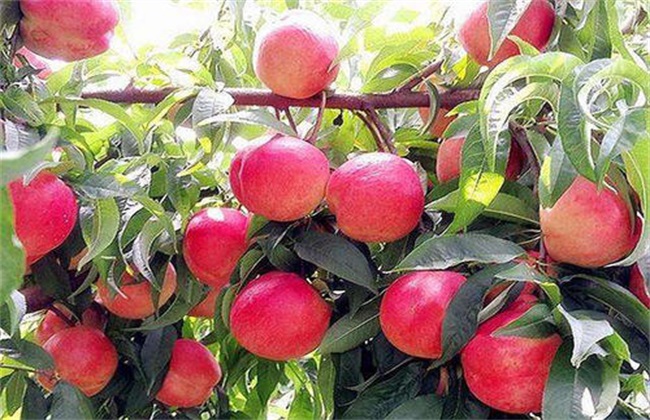
1. Blindly pursuing varieties
Information now spreads extremely fast, and high-quality fruit tree varieties from various places are very easily learned about by everyone. Many people, upon seeing such information, want to blindly follow the trend and introduce them, which is one of the common misconceptions. Fruit tree varieties are now becoming more and more finely differentiated, and most varieties have their own particular focus. Seedlings bought across regions are not necessarily suitable, so before buying, first find out whether they are suitable for planting in your area. Fruit trees take time to grow to maturity; it is not the case that just because you spent a few days learning about the information, someone else's fruit is already on the market. Behind successful cultivation there is inevitably the collection of all kinds of data, and inevitably varieties suited to the local area.
2. Blindly pursuing yield
Growers are very easily influenced by theoretical yields, and thus blindly pursue yield. When someone says each tree can produce 100 jin of fruit, and your rough estimate is only 80 jin, you then start using every kind of yield-boosting method, completely disregarding the tree's carrying capacity and ignoring the fact that the figures others give are mostly yields under extremely ideal conditions in every respect. Trees that succeed in boosting yield may be damaged considerably, with the full-bearing period dropping sharply, seriously affecting later yields. Those that fail at boosting yield directly end up as cultivation failures, with no future at all. The growth and carrying capacity of fruit trees is limited, so do not be influenced by other people's ideal figures; we need to increase to that yield level slowly.
3. Being unwilling to let go
This counts as one of the most common problems among growers, and the one that most easily traps people. During growth, fruit trees need constant management to steer them toward growing into high-quality trees, and in the process it is unavoidable to thin them out. Even before harvest, to ensure the normal ripening of the other fruits, you may have to remove some poorly growing fruits, but some people are just unwilling to let go, which ultimately leaves a large batch of fruits unable to develop and ripen normally, and their own losses are even more severe. This is just one example; there are quite a few other similar situations. When planting, you must be willing to make choices, and it is enough to protect the returns of most of the fruit trees.
4. Not paying attention to care
After harvest is the most critical moment for fruit trees; before that, it can only be said to be very important for the grower. After harvest, fruit trees basically use all their nutrients for their own growth, no longer supplying them to the fruits. If care is not paid attention to at this time, the fruit trees will age very quickly. Well-cared-for orchards will see a clear increase in both fruit tree quality and the full-bearing period; otherwise, they will quickly fall into a decline and die. Care includes fertilizing, pruning, clearing away diseases, keeping warm, and various other aspects. Doing a good job of caring for the fruit trees is the true way to develop cultivation over the long term.
The above are some common misconceptions about planting fruit trees. Planting fruit trees is a relatively long-term development; everyone should not blindly consider only the immediate returns, thereby leaving no returns for the future. That kind of planting does not last.