Methods and precautions for burying grapevines in soil for cold protection
In winter, the common cold protection measure for grapes is burying the vines in soil for cold protection. This is a key step in grape cultivation. Its purpose is not only to protect the aboveground vines so they can overwinter safely, but also to prevent the roots from freezing. However, there are several points to note when burying in soil for cold protection. Let's take a look at the detailed introduction below.
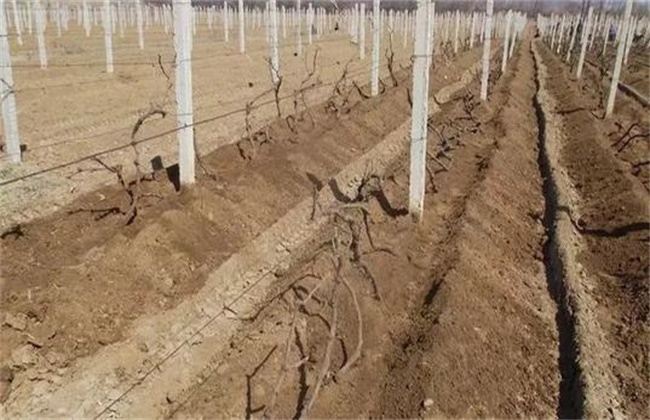
1. Preparation work
Grapes are temperate plants and belong to temperature-loving crops, with relatively poor cold tolerance. Generally, minus 17 degrees in winter is the dividing line between burying grapes in soil for overwintering and not burying them. Burying grapes in soil is usually carried out after autumn pruning and 10-15 days before the soil freezes, that is, when the ground temperature is close to zero degrees but has not yet frozen. Of course, the specific time should be adjusted flexibly according to local weather. Before burying in soil for cold protection, the grapes need to be pruned, the orchard cleaned and disinfected, and irrigation for freezing water and vine pressing done.
2. Soil burying methods
There are also many methods of burying in soil. The commonly used one is the direct soil burying method. This method is more suitable for orchards where the winter temperature is not very low and the soil is relatively fine. Another method is to first cover with organic matter, then cover with a layer of plastic sheeting or colored strip cloth, and then bury in soil. This method uses less soil and has a high safety factor. At present, mechanical soil burying has become widespread in most grape-producing areas of our country, but attention should be paid to the spacing between grapevines, and the roots must not be damaged. If it is cold-frame greenhouse grapes or an area without severe cold in winter, it is only necessary to address vine shriveling, and plastic sheeting can also be used with soil pressed along the edges so that no wind leaks through.
3. Precautions
First, after burying in soil, the soil mound should be patted firm, and wind leakage must be strictly prevented. In addition, when taking soil, keep as far away from the roots as possible, generally at least 1 m away from the root crown, so as to avoid freezing damage to the roots. Covering the vines but instead freezing the roots would make the loss outweigh the gain. When pressing the vines and burying them in soil, something can be placed under the bend of the main trunk to prevent the base from breaking, which would also cause extremely large losses. Because of differences in region and environmental temperature, the thickness of the soil cover is also different, and because the cold tolerance of various grape varieties also differs, the soil burying thickness needs to be determined according to local climatic conditions and the grape variety when burying. After burying in soil, check frequently before the soil freezes, with particular attention to the northwest side of the soil mound. If soil is scraped off, replenish it in time, so that the soil layer does not become too thin and cause the plants to suffer freezing damage.
The above is an introduction to the methods and precautions for burying grapevines in soil for cold protection. We hope it can help you. If you want to learn more related knowledge, please stay tuned to us.