Detailed Explanation of Key Points of Winter Pruning Techniques for Chestnut
The chestnut tree is an excellent dry fruit tree species native to China, with strong adaptability and extremely strong cold and drought resistance, and winter pruning is an extremely critical part of chestnut cultivation. So how should chestnuts be pruned in winter? Many farmers are asking, so let's take a look together with the editor below.
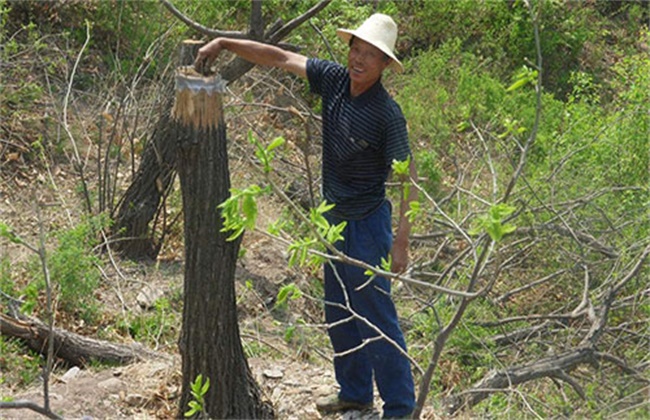
1. Pruning Time
The best time for winter pruning of chestnut is from half a month after leaf fall to half a month before bud break at Spring Festival, that is, from mid-December to early February of the following year. However, if there is injury or freezing weather, it should be postponed to avoid low-temperature freeze damage causing a greater impact on the fruit trees.
2. Pruning of Young Trees
For winter pruning of young trees, one should grasp the principles of pruning during the dormant period as supplementary, preferring light rather than heavy pruning, and thinning less and not heading back. During winter pruning, all side branches below 40-50 cm on the trunk should be cut off, and at the same time, excessively dense branches, slender branches, overlapping branches, and crossing branches inside the tree canopy should be thinned out. At the same time, fruiting branch groups should be well selected and retained, the distance and direction between each branch group should be adjusted, and the main branches should be well cultivated. The extension branches of the scaffold branches can be left unpruned for one year and headed back in the second year.
3. Pruning of Trees in Full Fruit Period
For pruning plants in the full fruit period, diseased and insect-damaged branches, dead and dried branches, crossing branches, and overlapping branches inside the tree canopy should be cut off to enhance the ventilation and light penetration inside the crown, concentrate nutrients, and make the fruiting branch groups grow thick and strong. For the terminal branches and extension branches, it is advisable to leave 50 cm for heading back, so as to promote the development of side branches, increase fruiting mother branches, and at the same time control the speed at which the crown moves outward. For densely growing fruiting mother branches, a portion should be properly thinned out, or a portion of the renewal branches should be headed back. For excessively vigorous fruiting branches, proper heading back can also be carried out to promote the sprouting of new branches below, renew and rejuvenate the fruiting branch groups.
4. Pruning of Aging Trees
For plants with relatively severe aging, they can be dug out and replanted. If there are sprouts at the base, superior varieties can be grafted, and after they are cultivated into usable trees, the aging trees can then be sawed off. For plants that are not too severely aging, after cutting off dead and dried branches and diseased and insect-damaged branches, the water sprouts and thin weak branches inside the tree canopy can then be headed back, and the aging parts can be retrenchment pruned. As for the new branches that sprout the following year, well-growing ones can be selected from among them for cultivation, so that they become scaffold branches and fruiting branch groups.
The above is an introduction to the winter pruning techniques for chestnut. I hope it can help you. If you want to learn more related knowledge, please keep following us.