Detailed Explanation of Key Points of Loquat Winter Management Techniques
Loquat is a common fruit; its fruit is rich in nutrients and also has the main effect of relieving cough and soothing the throat. As winter arrives, most fruit trees enter winter, but loquat is at this time just before flowering. Management at this time is therefore quite important. Let's take a look together with the editor below.
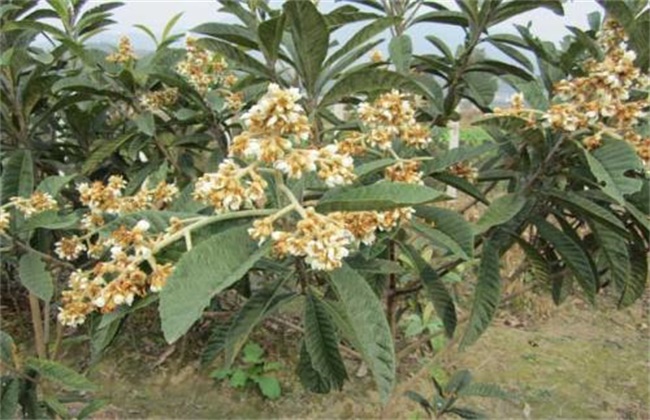
1. Flower thinning and fruit thinning
Because loquat has a large number of flowers and a long flowering period, it consumes a lot of nutrients. If flowers and fruits are not thinned in time, a large amount of nutrients will be consumed during flowering and fruiting, weakening the tree vigor, causing alternate bearing, smaller fruit, and poorer quality, and seriously affecting economic returns. Therefore, in order to save nutrients, overcome alternate bearing, and improve yield and quality, flower and fruit thinning must be carried out according to actual conditions. Flower thinning is generally carried out when the flower clusters are fully emerged. The flower clusters of adult trees are relatively large, and the earlier the flower thinning, the better. Generally, the amount of flower thinning is controlled between 30%-50%. Because the flowering period of loquat is long, fruiting generally has to wait until February. Fruit thinning first involves removing diseased and insect-damaged fruit, deformed fruit, and injured or frozen fruit, then removing densely set fruit, and keeping fruit of uniform size.
2. Applying overwintering fertilizer
When loquat plants emerge flower clusters in November, apply 25 kg of decomposed farmyard manure and 3 kg of superphosphate per plant. Six to eight radial trenches 15 cm deep, 10 cm, and 20 cm wide can be dug around the outer edge of the canopy. Then spread the fertilizer into the trenches and cover with soil. Doing this can increase tree nutrition, improve the tree's cold resistance, promote more flowering and increase the fruit-setting rate, laying a solid foundation for a bumper harvest the following year.
3. Preventing frost damage
The flowering period of loquat is in winter, and winter is sometimes a season with more rain, snow, and low-temperature weather. If cold protection measures are not taken, the flower organs and tree body will suffer frost damage, thereby affecting the fruit-setting rate. Therefore, in addition to applying sufficient base fertilizer, cold protection and frost resistance measures must also be taken. Water can be irrigated in the orchard before low temperatures arrive, which can improve cold resistance. Plastic film can also be used for mulching, which has the effect of preserving heat and moisture. In November, the trunk can also be whitewashed to reduce the temperature difference between day and night, avoid bark frost cracking, and enhance cold resistance. When frost occurs, smoking can be used to prevent it. Before frost damage, plant cytokinin and fruit antifreeze can be sprayed to improve the frost resistance of flowers and fruit.
The above is an introduction to loquat winter management techniques. We hope it can help you. To learn more related knowledge, please follow us.